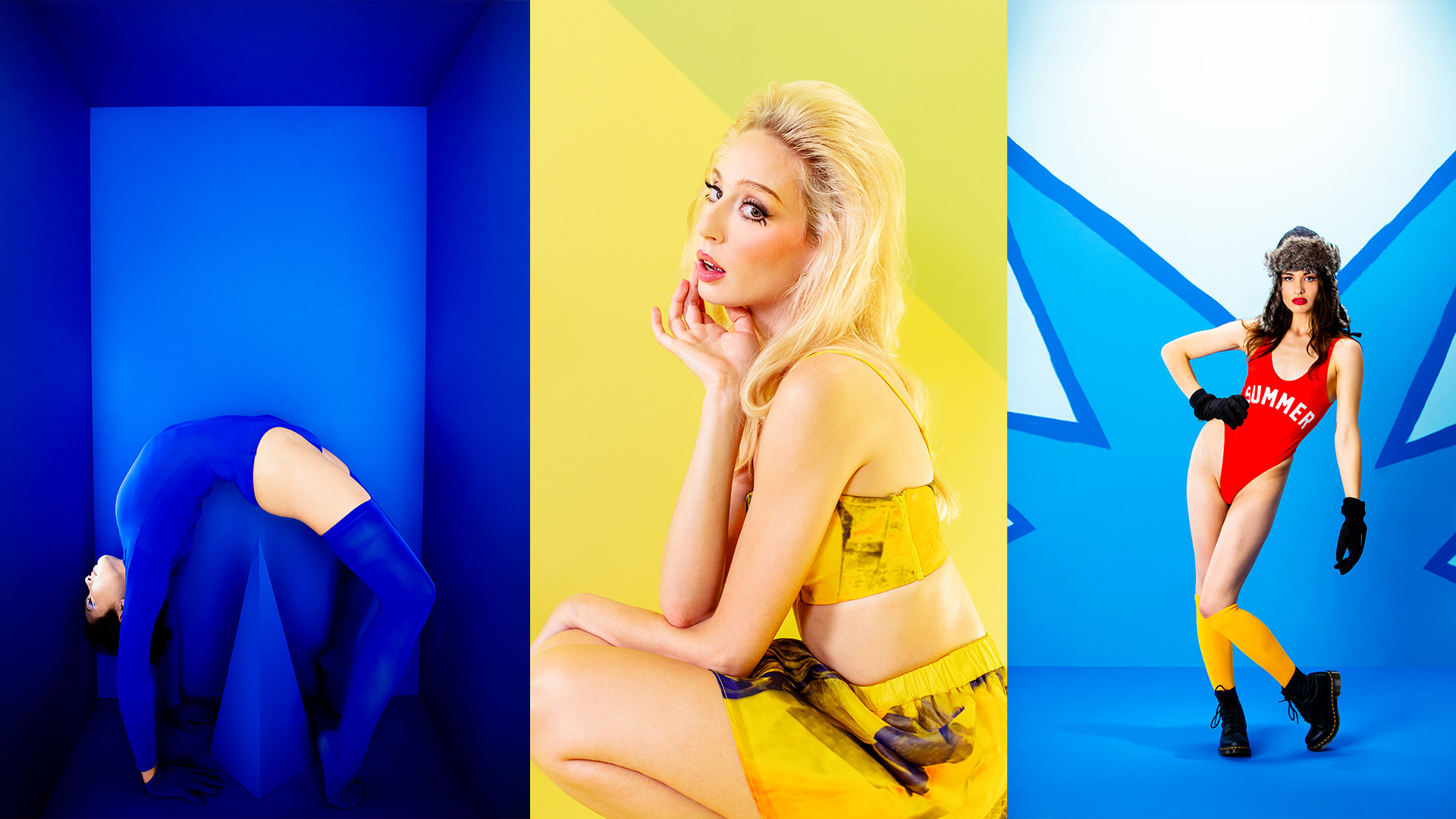
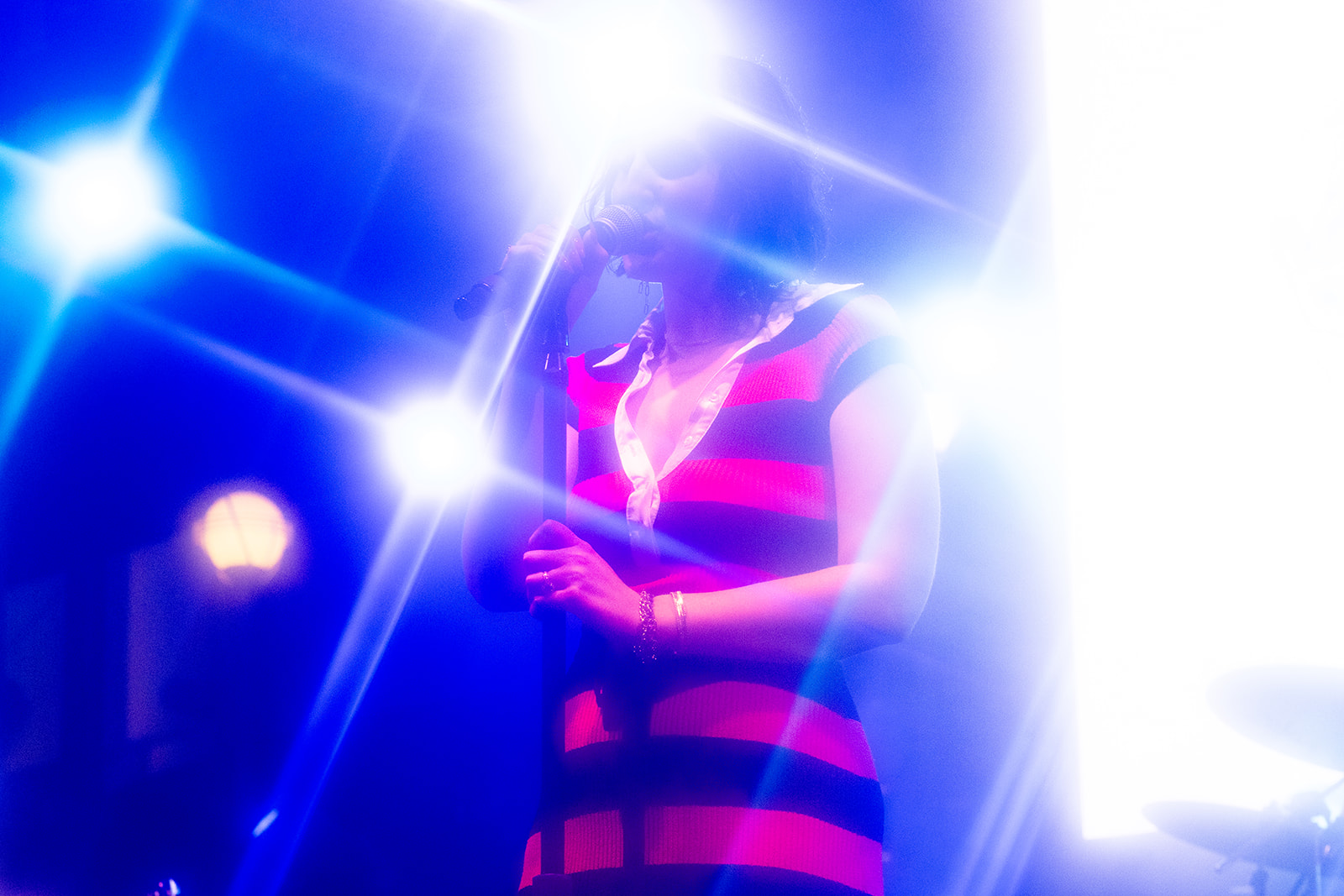
David and I do a lot of studio photography, and we love mixing in different Prism Lens FX filters to change things up. They are one of those tools that can instantly transform a photo and make it feel a little more surreal or cinematic.
But one thing I had always wanted to try with them was live music.
Use Coupon Code JADAANDDAVID for 15% off the entire Prism Lens FX website.
Studio lighting is predictable. Live music is not.
Concert lighting is constantly changing. You have fog machines, lasers, spotlights, strobes, and musicians moving all over the place. I've always been curious how these filters would perform in that kind of chaotic environment.
Would they still work?
Would the effects be too intense?
Would it even be possible to control them?
I finally had the opportunity to find out when I got to photograph one of my favorite bands, Cinnamon. Coincidentally, the band also happens to include two of my favorite humans. Shout out to Nick Morrison and Harley Quinn Smith.
And let me tell you...
These filters absolutely shine in a live music environment.
The Filters I Used
For this show I mainly rotated between three filters:
Each one creates a very different type of effect, and they all behaved a little differently once the stage lights came on.
Moody FX Filter (My Favorite)

Hands down my favorite filter of the night was the Moody FX filter.
This filter basically combines two effects in one. It blends a diffusion filter with a starburst filter, which means it softens the image slightly while also turning bright light sources into dramatic four point star flares.


And in a concert environment...there are a lot of bright light sources.
Stage lights, spotlights, LEDs, reflections off instruments. All of those lights instantly turned into these incredible starbursts. The photos started to feel almost dreamlike.
This filter definitely performs best when there is strong light hitting the lens. The more light you give it, the more dramatic the effect becomes.


Which basically makes it perfect for concerts.
The combination of soft haze plus starburst lighting made the images feel surreal and cinematic. They didn't look like traditional concert photography at all, which I loved.
It felt more like documenting a dream than documenting a show.
Lucid Dream FX Filter

My second favorite was the Lucid Dream FX filter.
This filter is all about softness and glow. It has a unique coating that creates a dreamy haze, softens highlights, and gives skin tones a gentle glow.


During the show there was fog drifting across the stage, and this filter exaggerated that atmosphere in the best way possible. The haze from the filter mixed with the fog and lights and created this really surreal vibe.
It almost made the whole performance feel like a memory instead of a moment.


Another thing I love about this filter is that it can make digital images feel a little more film like. It softens the sharpness just enough to take the digital edge off.
For portrait work it's amazing. But I was really surprised how much I liked it for music too.
Split Diopter Filter

I also experimented with the Split Diopter filter.
This one is a little more technical.
A split diopter filter essentially splits the frame into two zones. One half of the filter adds blur or refraction while the other half stays clean.

When you use it intentionally, it can create really interesting layered compositions where one part of the frame feels distorted and the other stays sharp.
But it definitely requires more control.
You have to rotate the filter and frame the shot very intentionally to make it work. In a fast paced concert environment where people are moving constantly and lights are changing every second, it was a little harder to use reliably.
I still got some cool shots with it, but it's definitely a filter that works better when you have a little more time to compose.
Switching Filters During a Concert
One thing that made this whole process way easier was using the Prism Lens FX Go Bag.
If you've ever tried to swap filters in a crowded concert pit, you know how chaotic that can get. The Go Bag made it really easy to store multiple filters and grab them quickly while shooting.
I could swap filters between songs without digging through my camera bag, which made a huge difference.
If you plan on shooting with multiple filters on location, I honestly think this bag is a must.
Final Thoughts
I went into this experiment curious if these filters would work for live music.
Now I'm wondering why I didn't try it sooner.
Live shows are full of dramatic lighting, movement, and atmosphere. All the things these filters respond to. Instead of fighting that chaos, the filters actually amplify it and turn it into something visually interesting.
The Moody FX filter especially blew me away.
I can pretty confidently say this now. I'm never going to a concert without these filters again.