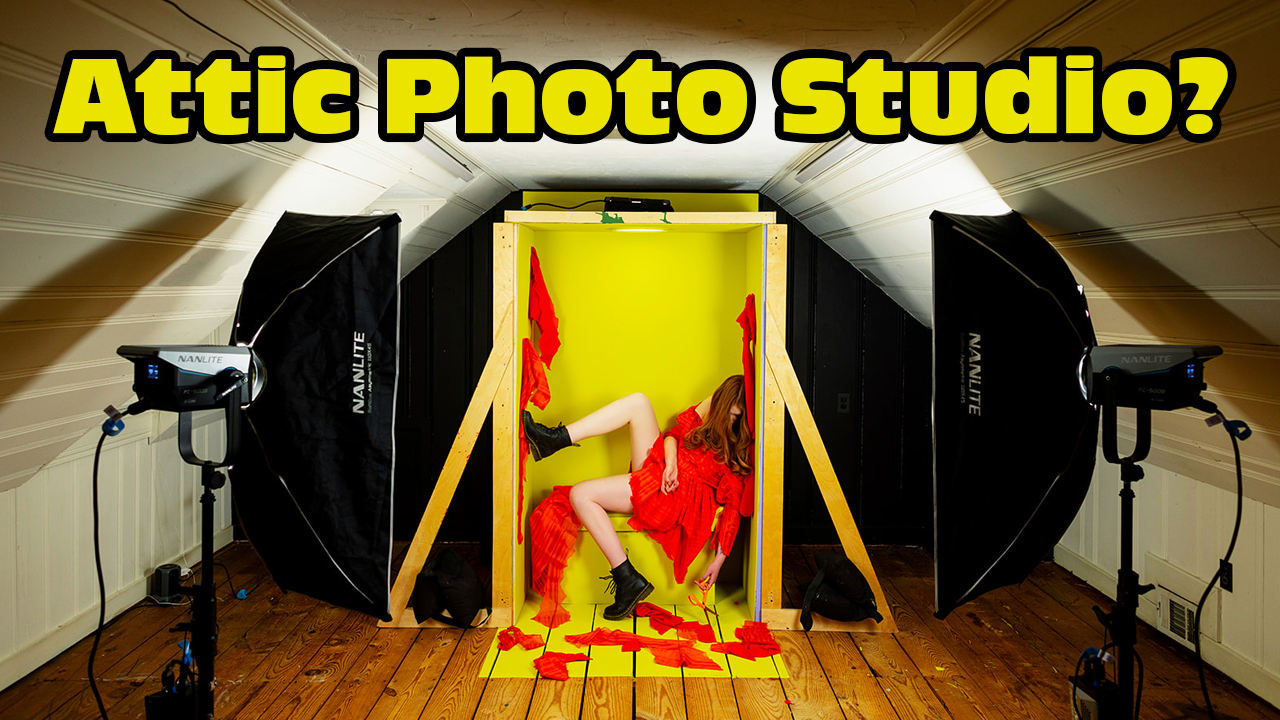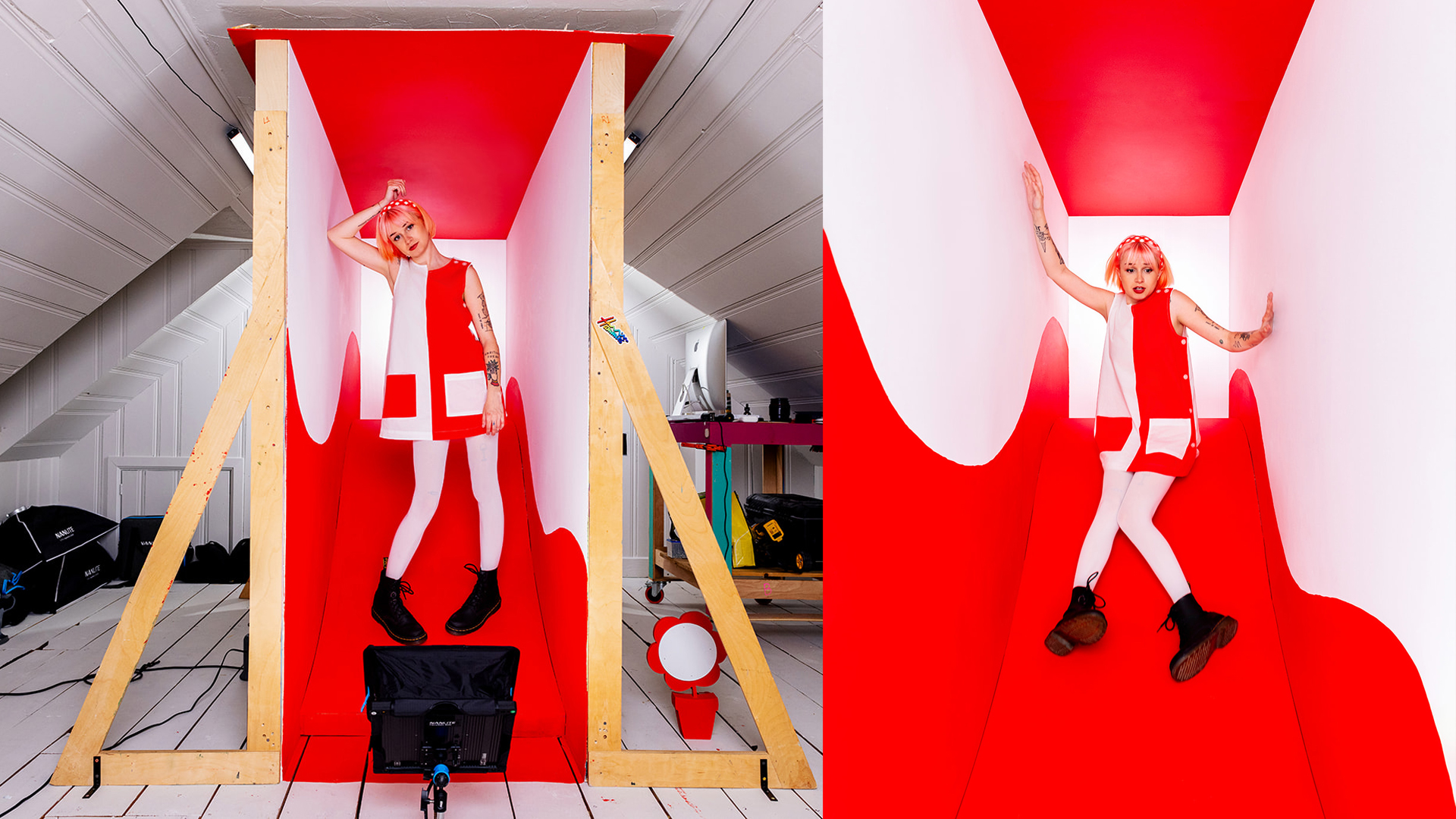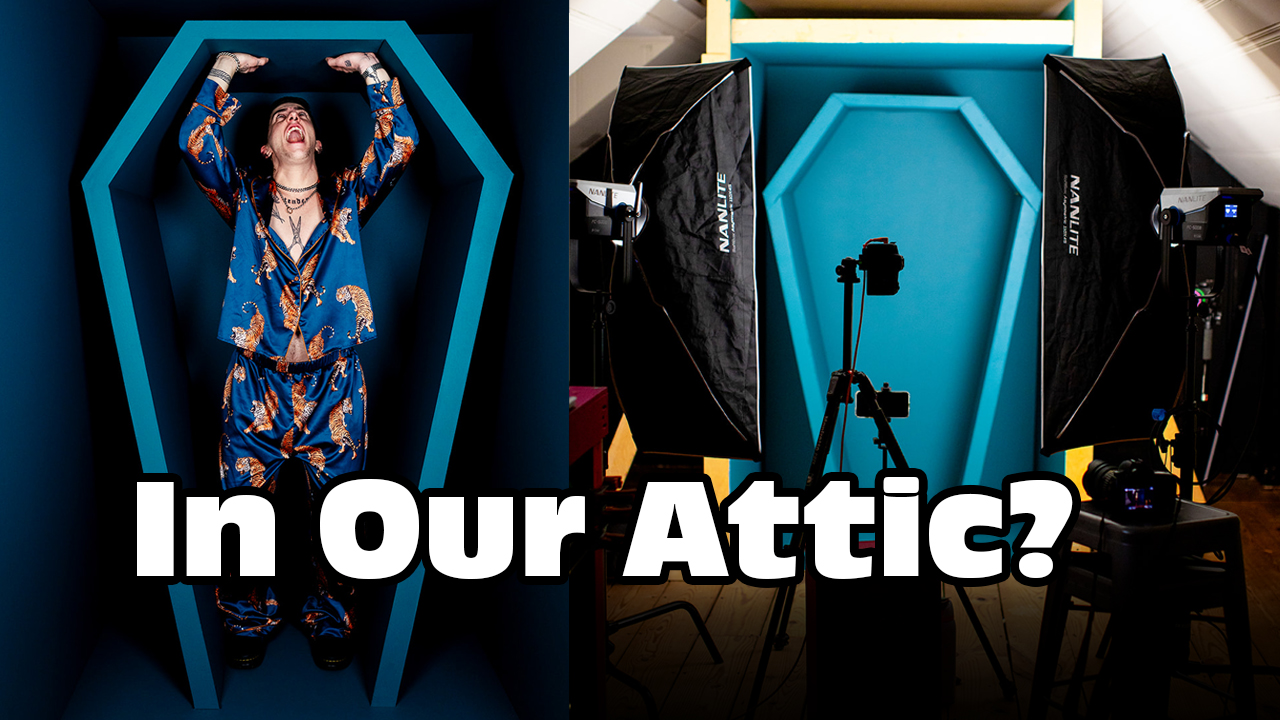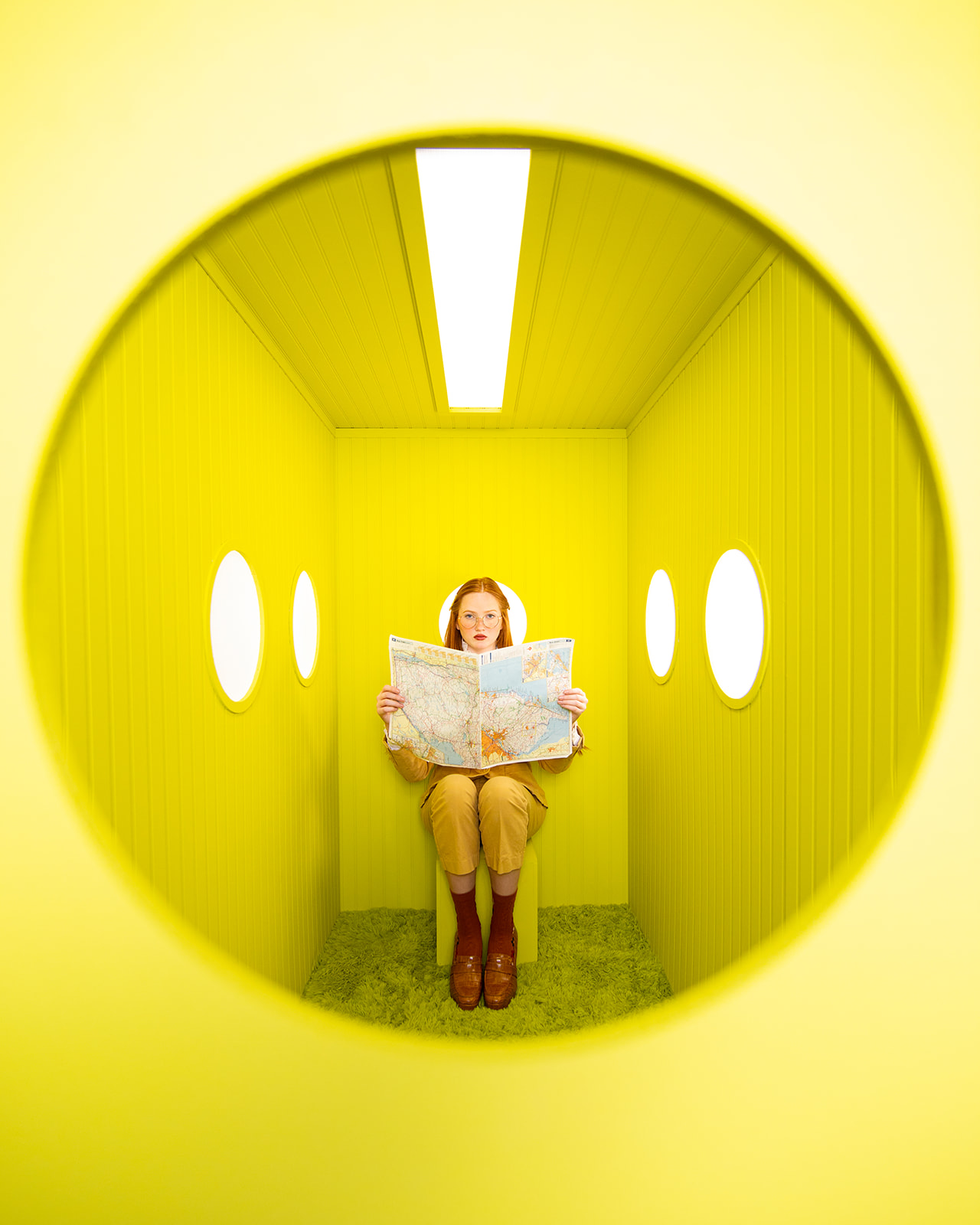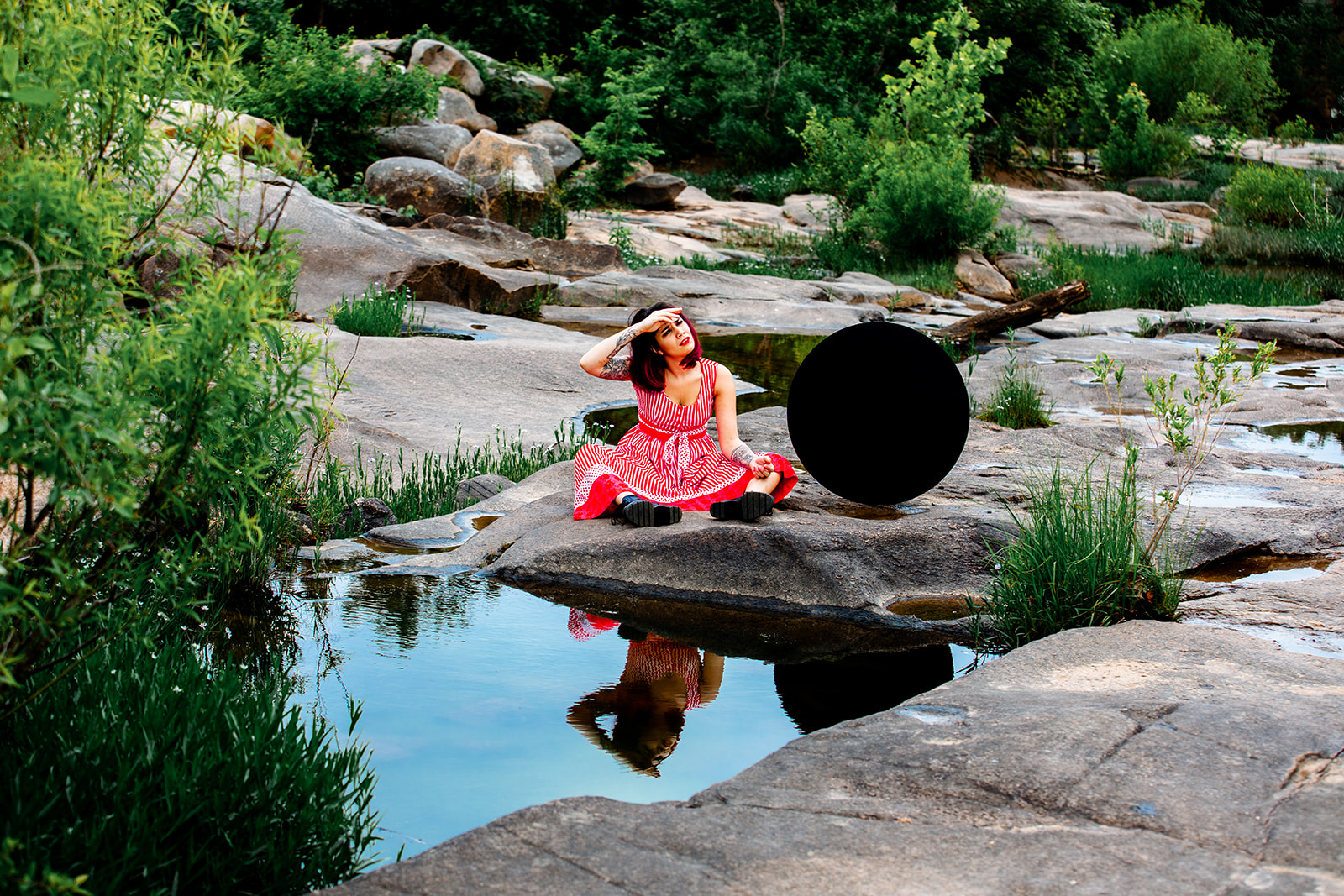
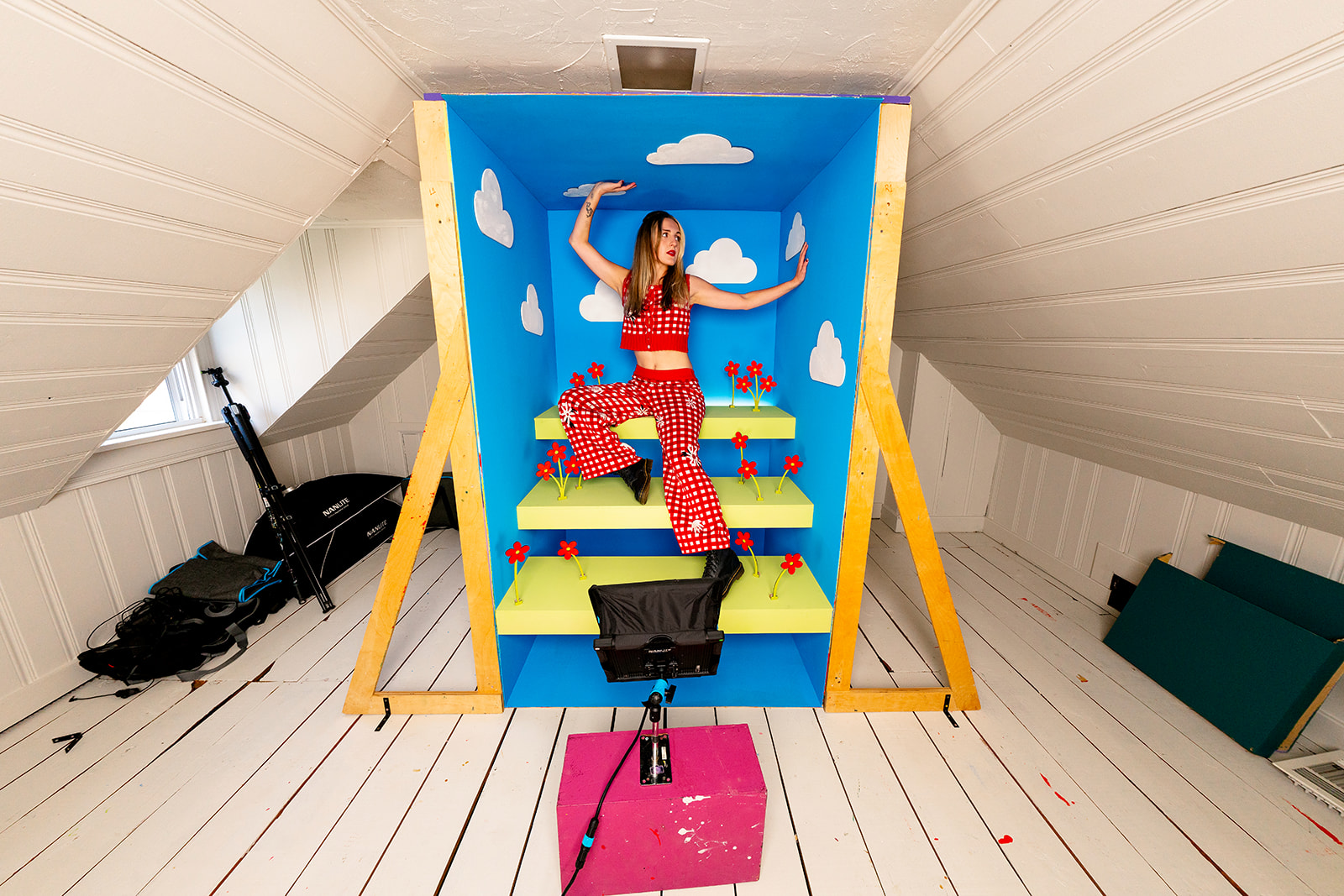
For Set 4 of our Attic Series, we built an entire portrait shoot around a 15mm fisheye. Most lenses are chosen to flatter a subject. This one bends the frame and forces a completely different approach.
We used the Sigma 15mm f/1.4 DG DN Diagonal Fisheye Art inside our attic, where space is already tight and every design decision matters.
Why this lens changes how you shoot portraits
This lens was originally designed for astro photography, not portraits, which is exactly what makes it interesting.
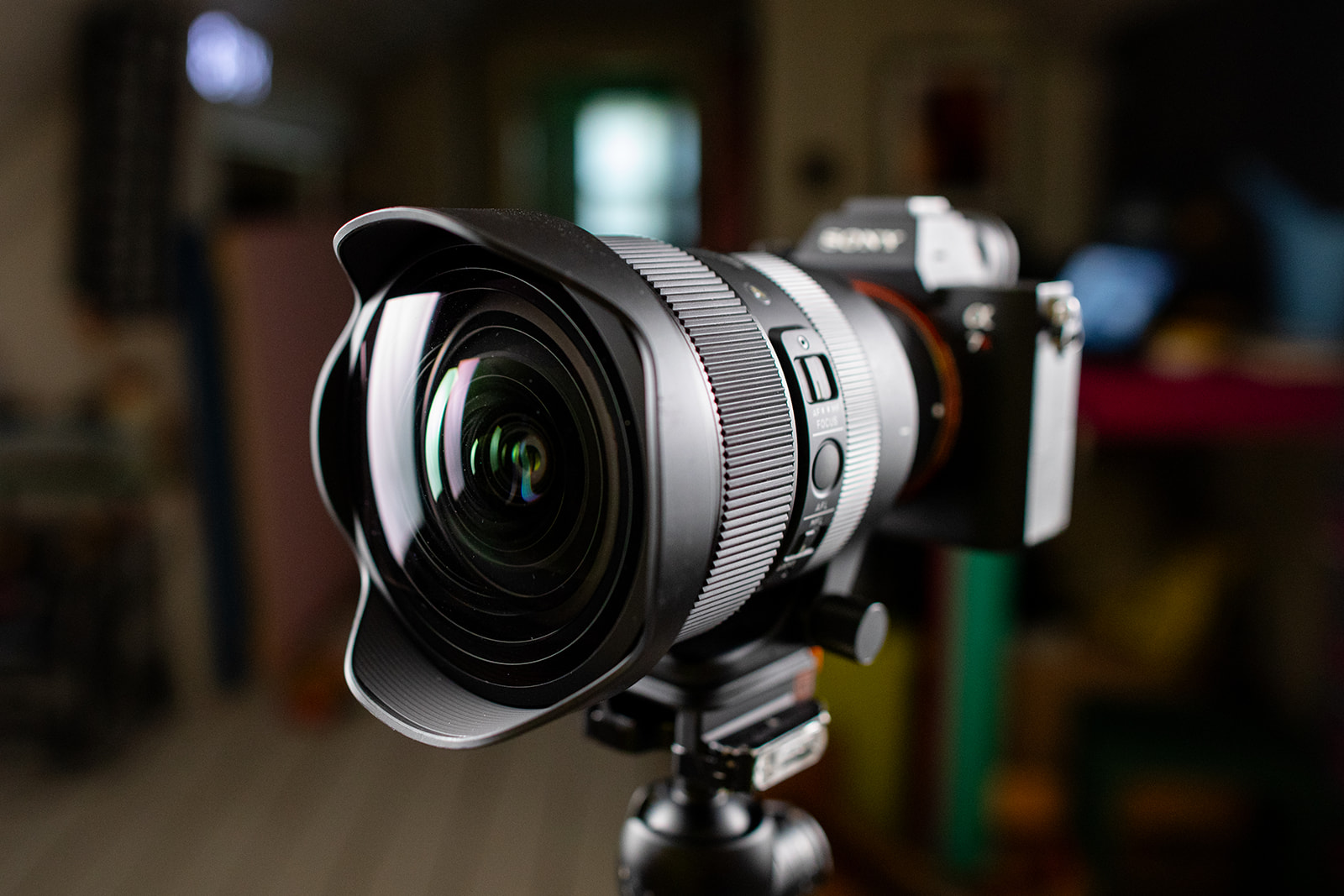
It fills the entire frame while introducing strong curvature, so straight lines begin to bend as they move toward the edges. The center of the frame feels more grounded, but everything around it starts to stretch and warp, which creates a much more immersive perspective.
Instead of correcting distortion, this lens leans into it.
Designing the set around the lens
We knew from the start that this lens would define the final images, so the set had to be designed with that in mind.
At 15mm, there is no hiding anything outside the frame. You are capturing a huge amount of the scene, which meant we needed full control over every surface that would be visible.
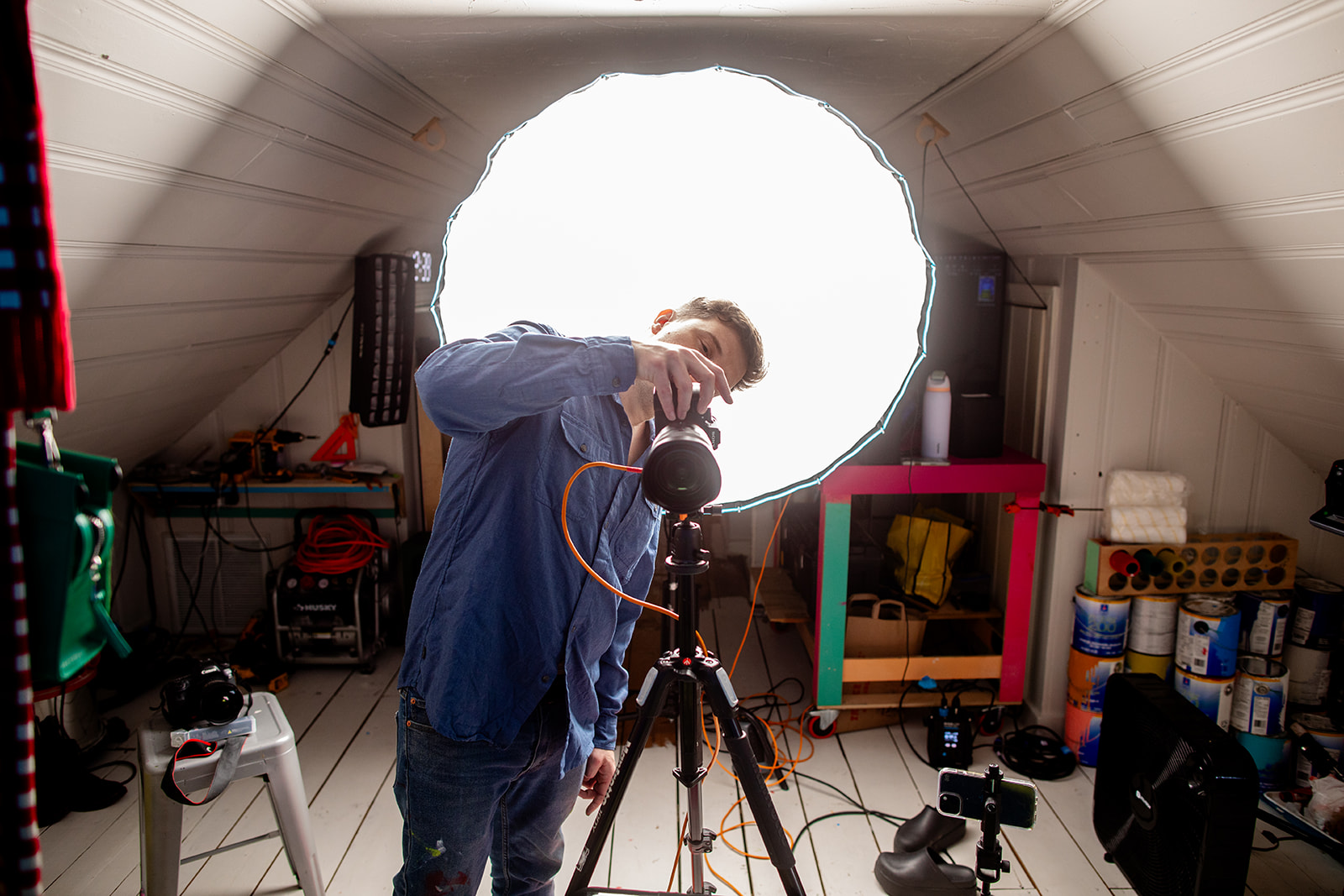
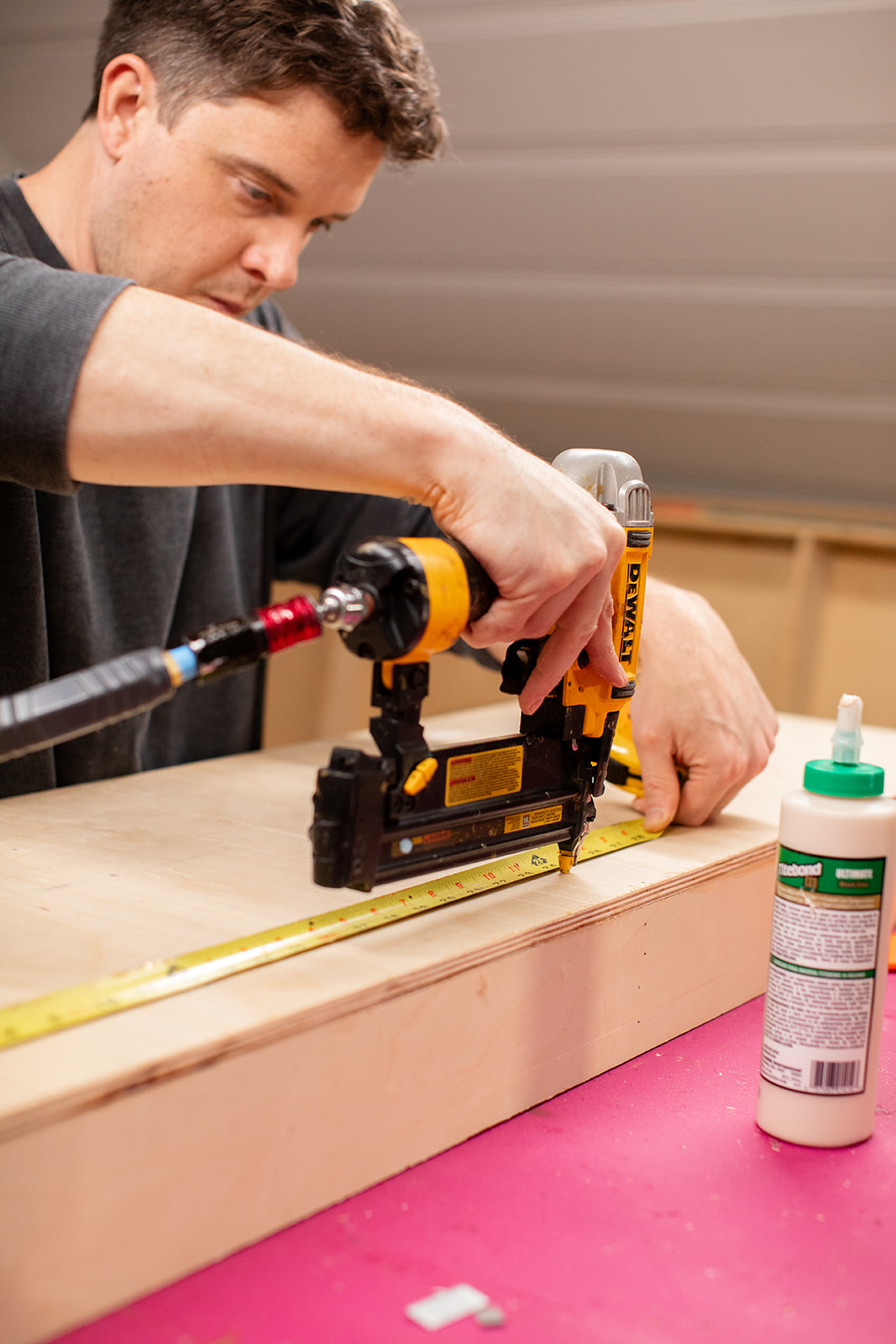
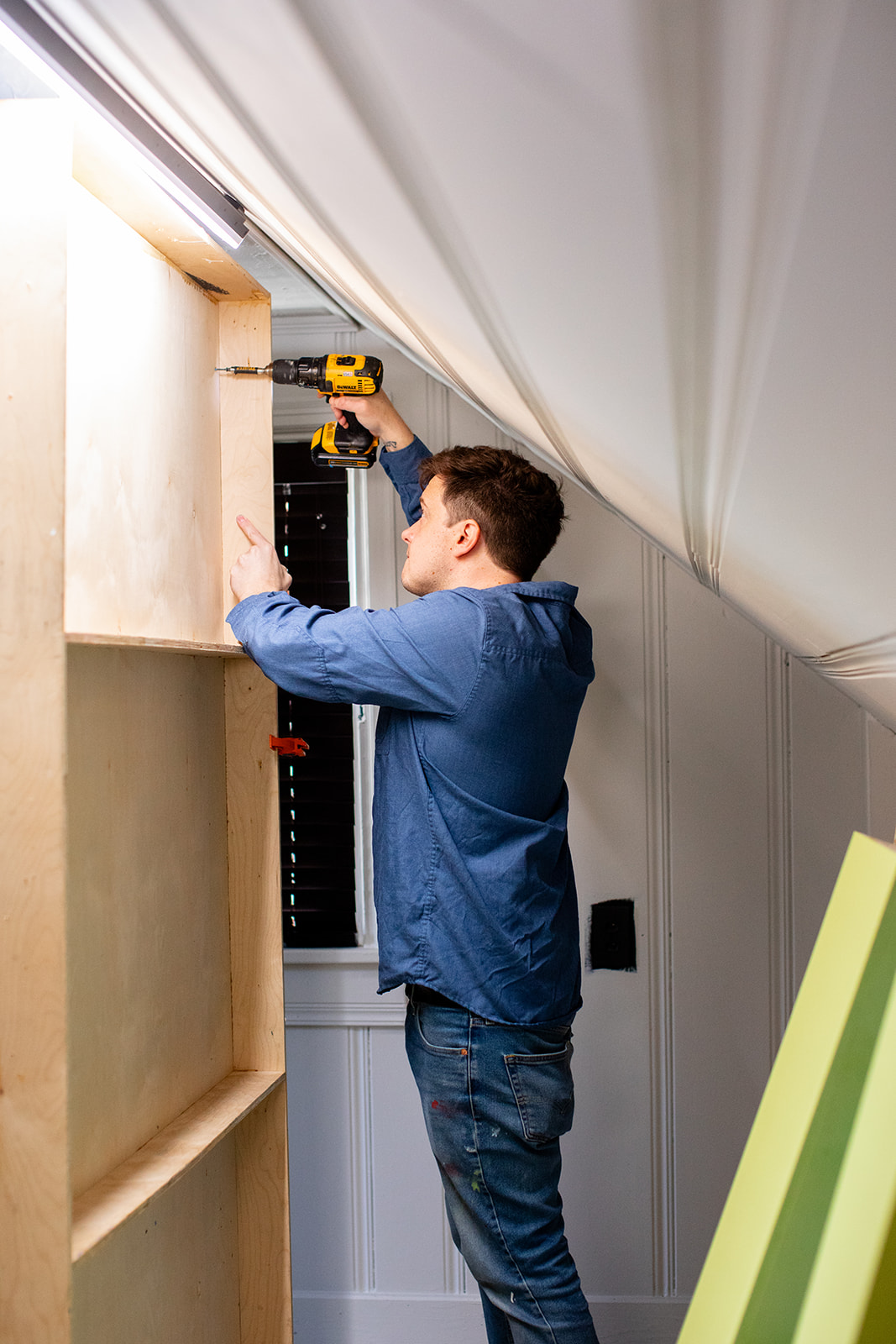
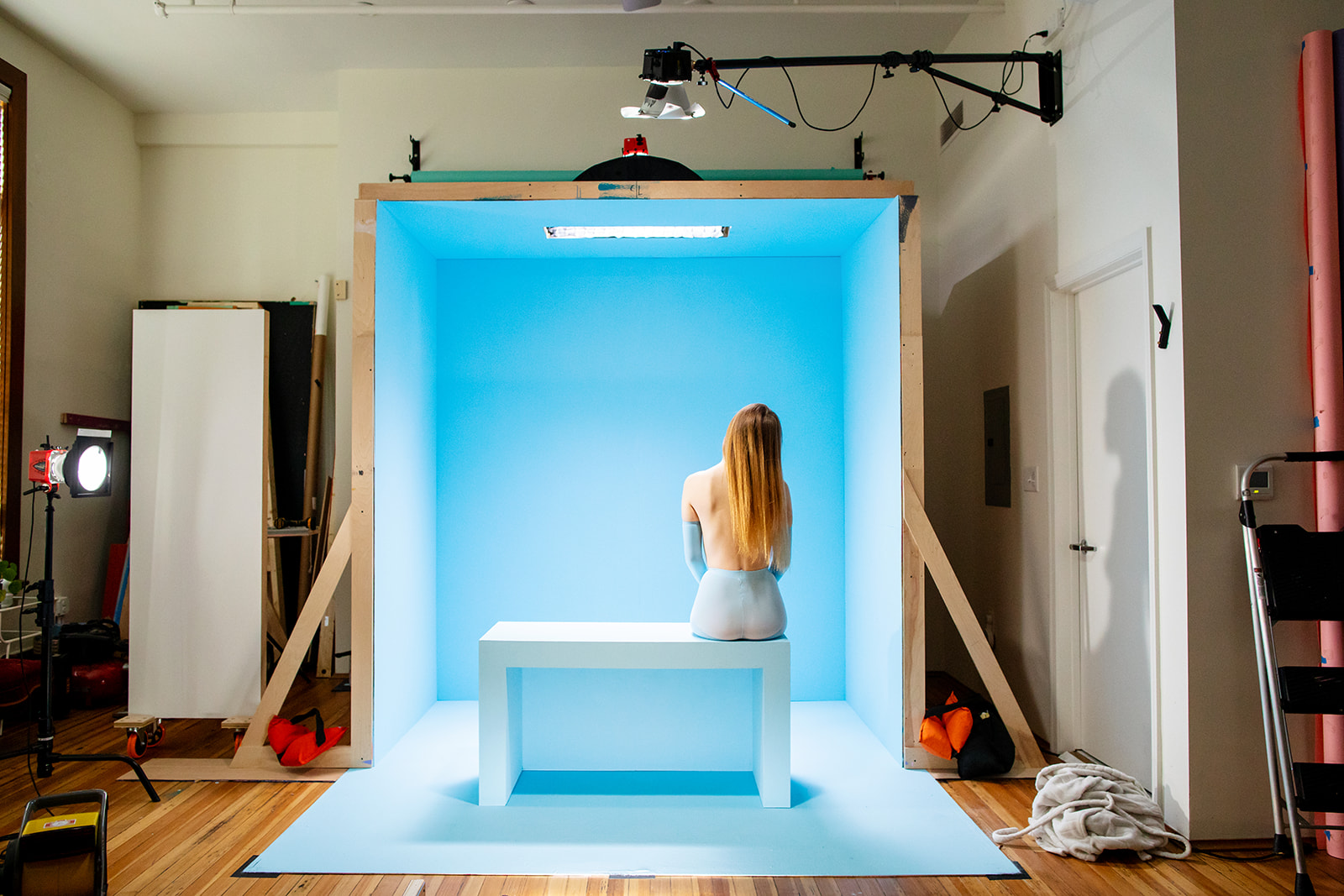
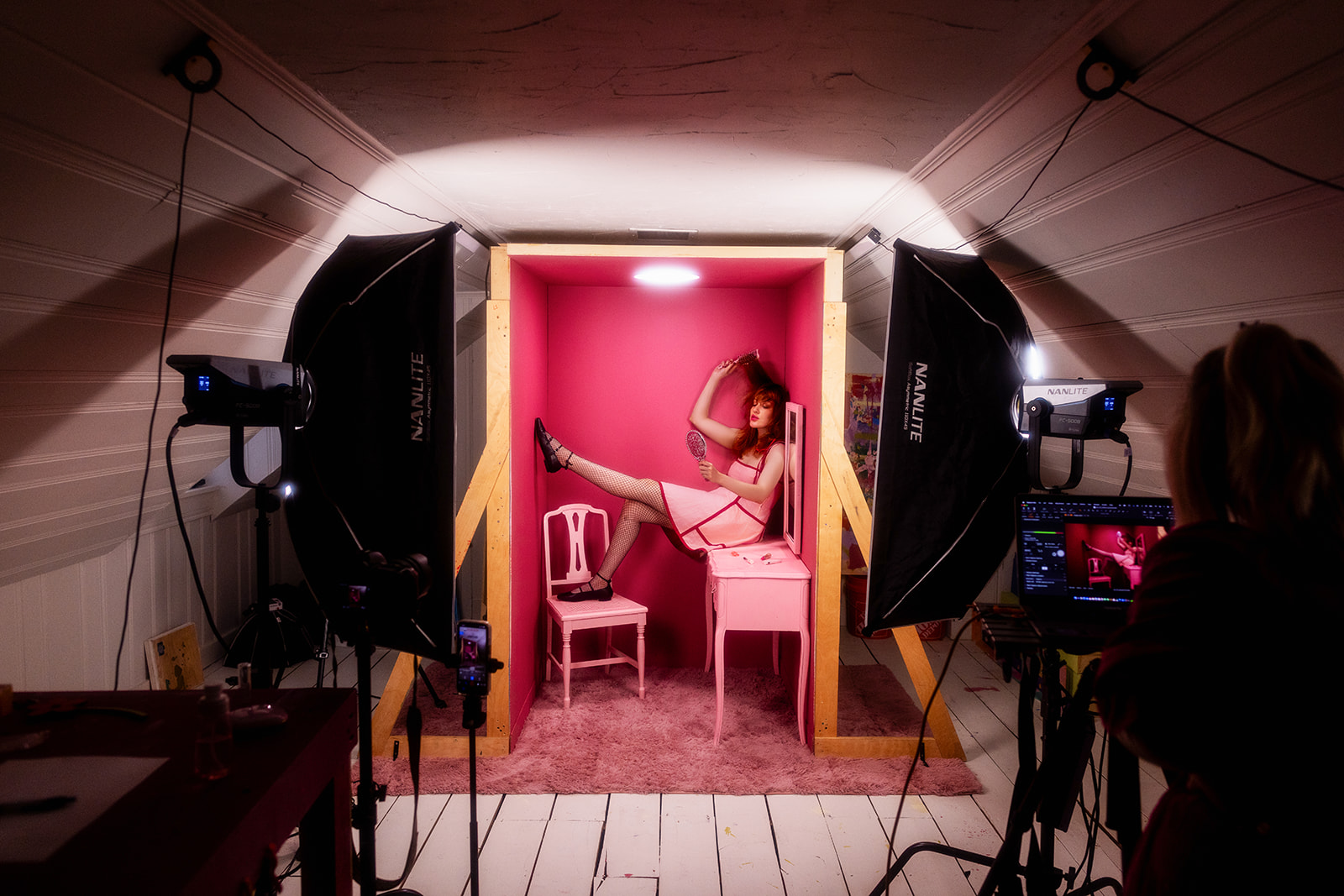
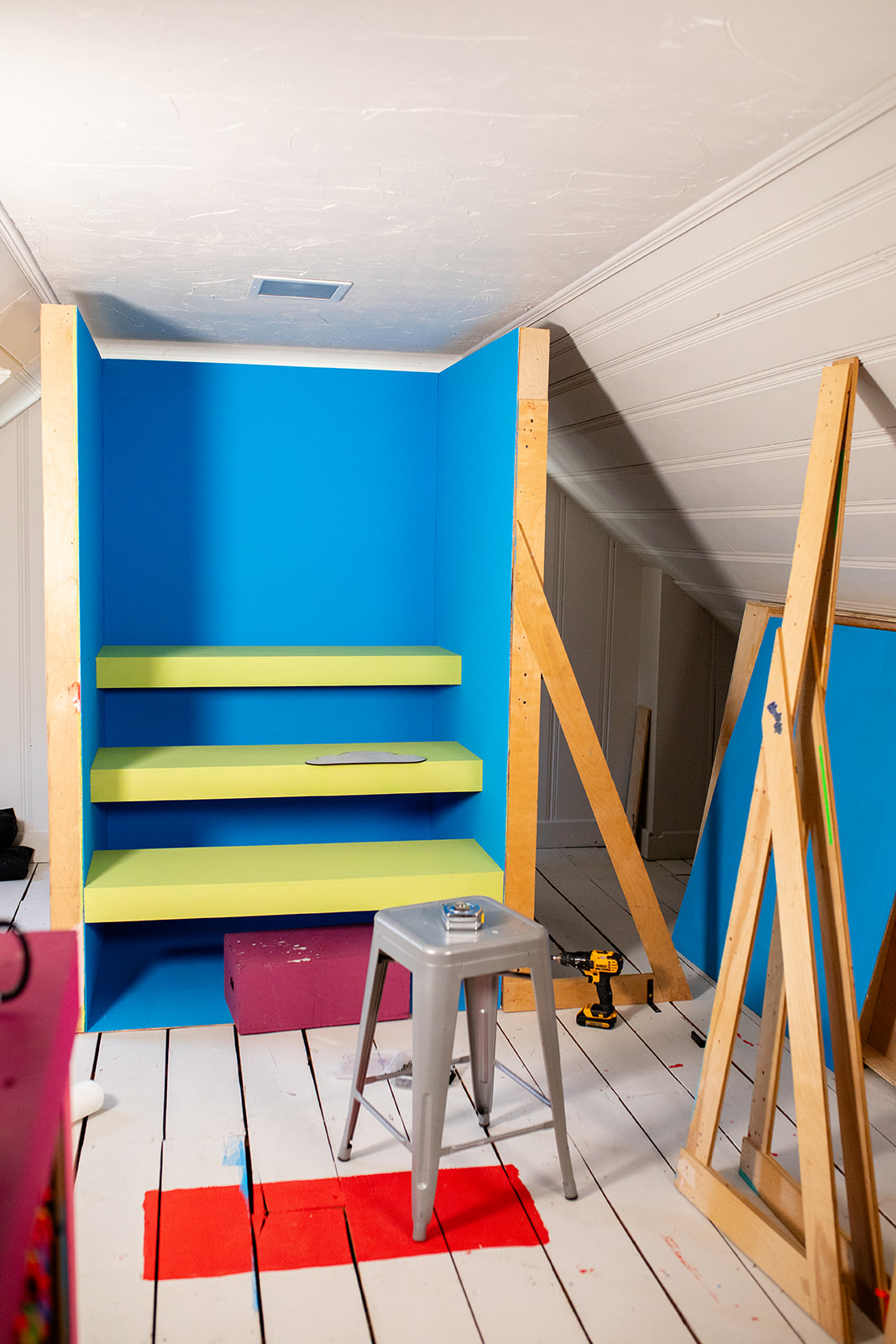
We built a fully enclosed hallway using flats, including walls, a floor, and a ceiling. That gave us the flexibility to shoot wide without breaking the illusion and allowed the distortion from the lens to feel intentional instead of distracting.
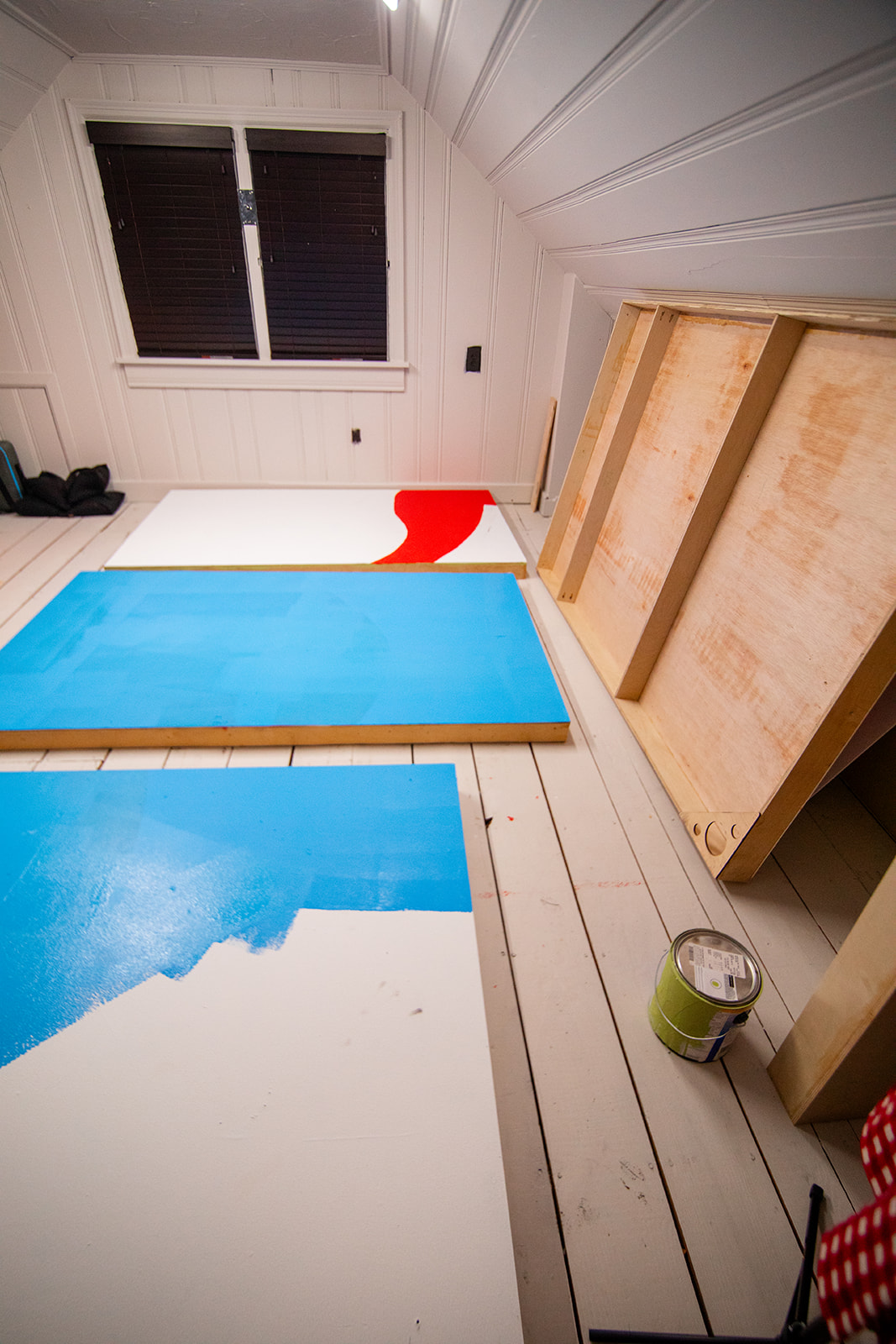
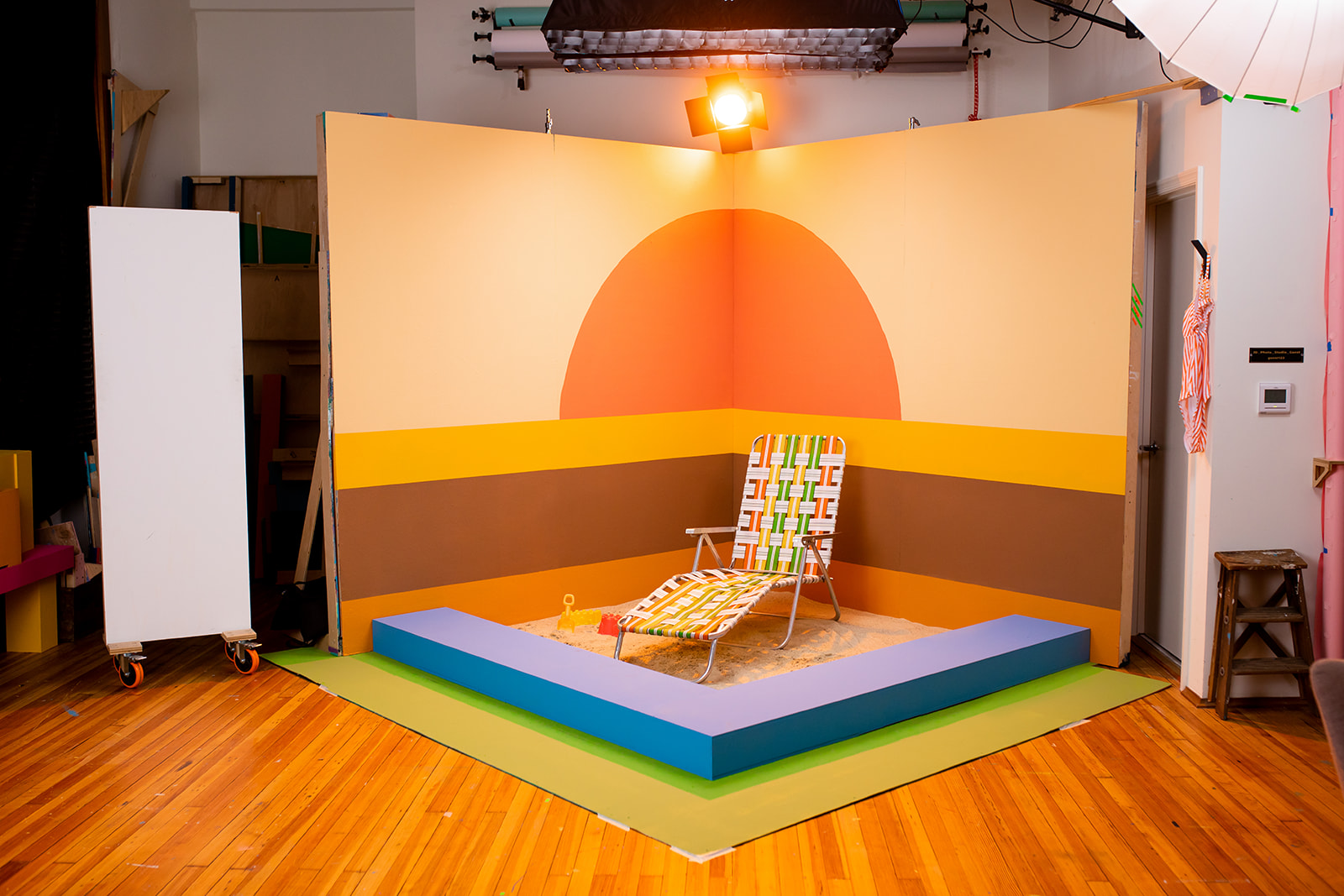
A flat is essentially a reusable wall that you can build, paint, and rework over and over again. All of our sets are built this way, which makes it possible to keep creating new environments without starting from scratch each time. Once you understand how to build one, you can create almost anything with just a few pieces. David has an entire flat building course that teaches you how to build your first flat.
The concept
The concept started with the outfit.
A red and white checkered look from Saint Geraldine immediately felt like a picnic, so we used that as a starting point and pushed it into something more stylized.
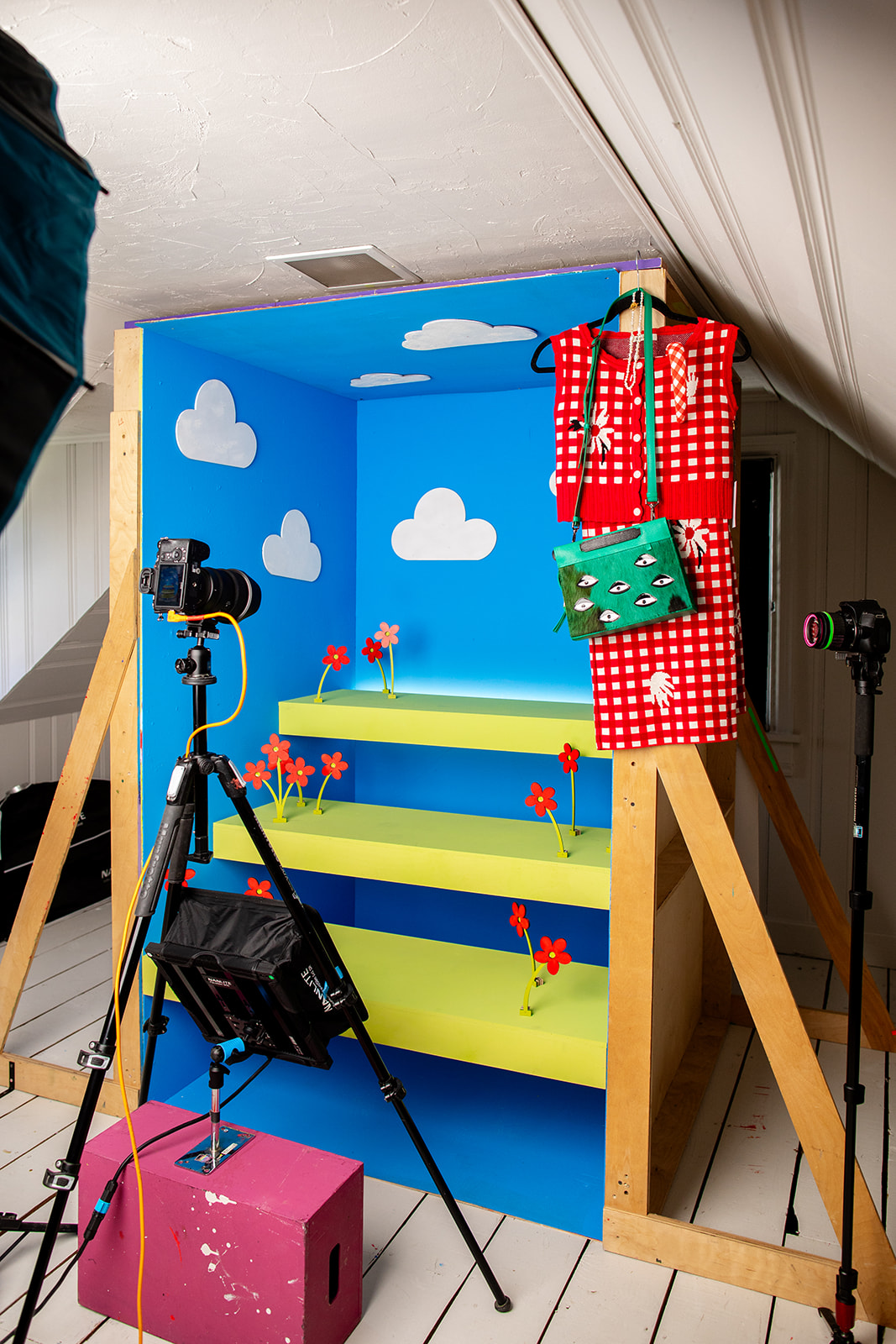
We created a surreal version of that idea with:
- a floating staircase to mimic a hill
- plywood flowers and clouds
- bold, graphic colors that would hold up once the lens started bending the scene
To build out the details, we designed the flowers and clouds digitally and cut them out of plywood using our xTool laser. That process makes a huge difference because it allows us to create custom shapes quickly and keep everything consistent across the set.
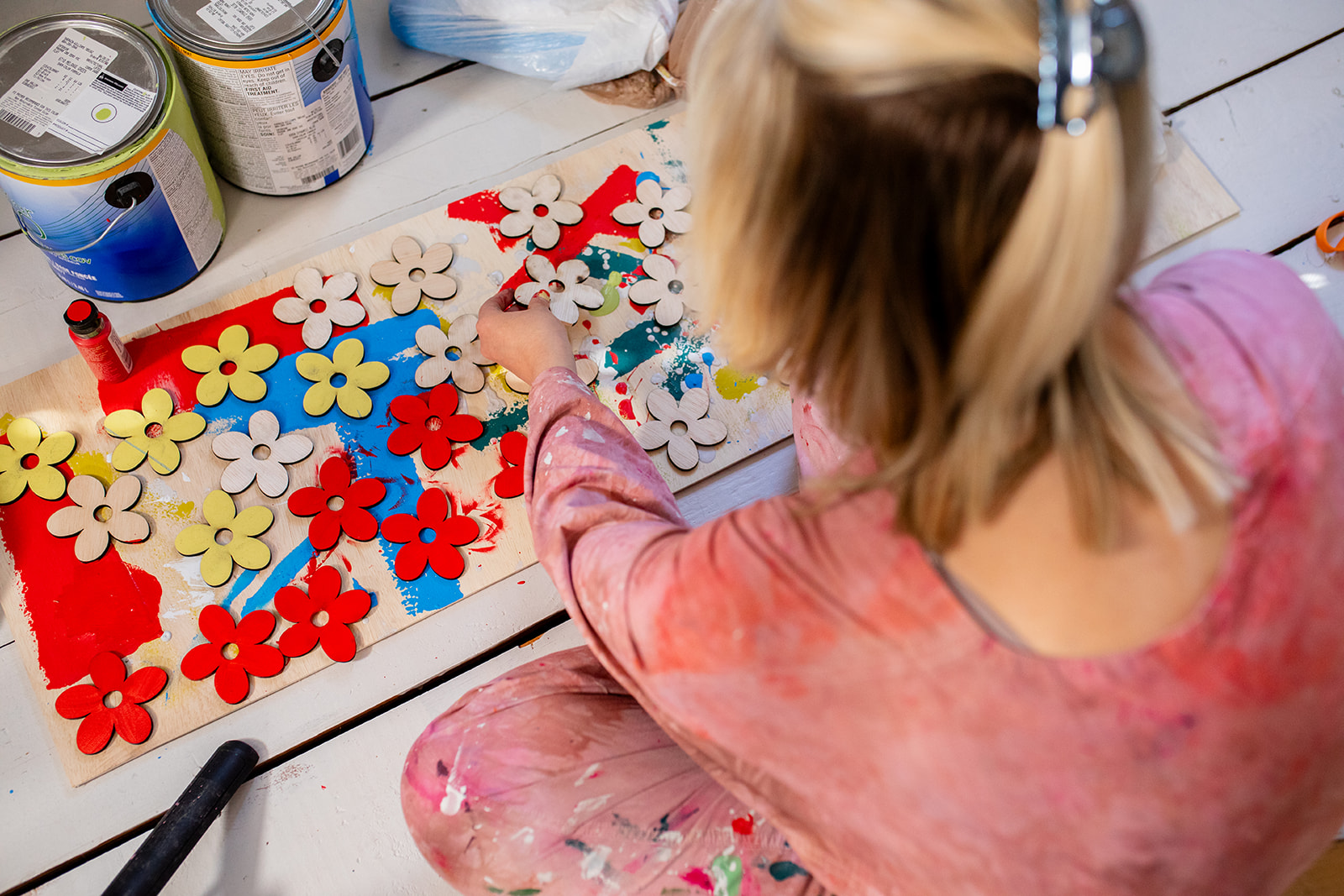
Once everything was cut, we painted each element to match the palette. The walls were painted blue to feel like sky, the stairs became green to reference grass, and the flowers were painted bright red to tie back to the outfit and create contrast. The clouds stayed white to keep everything feeling clean and graphic.
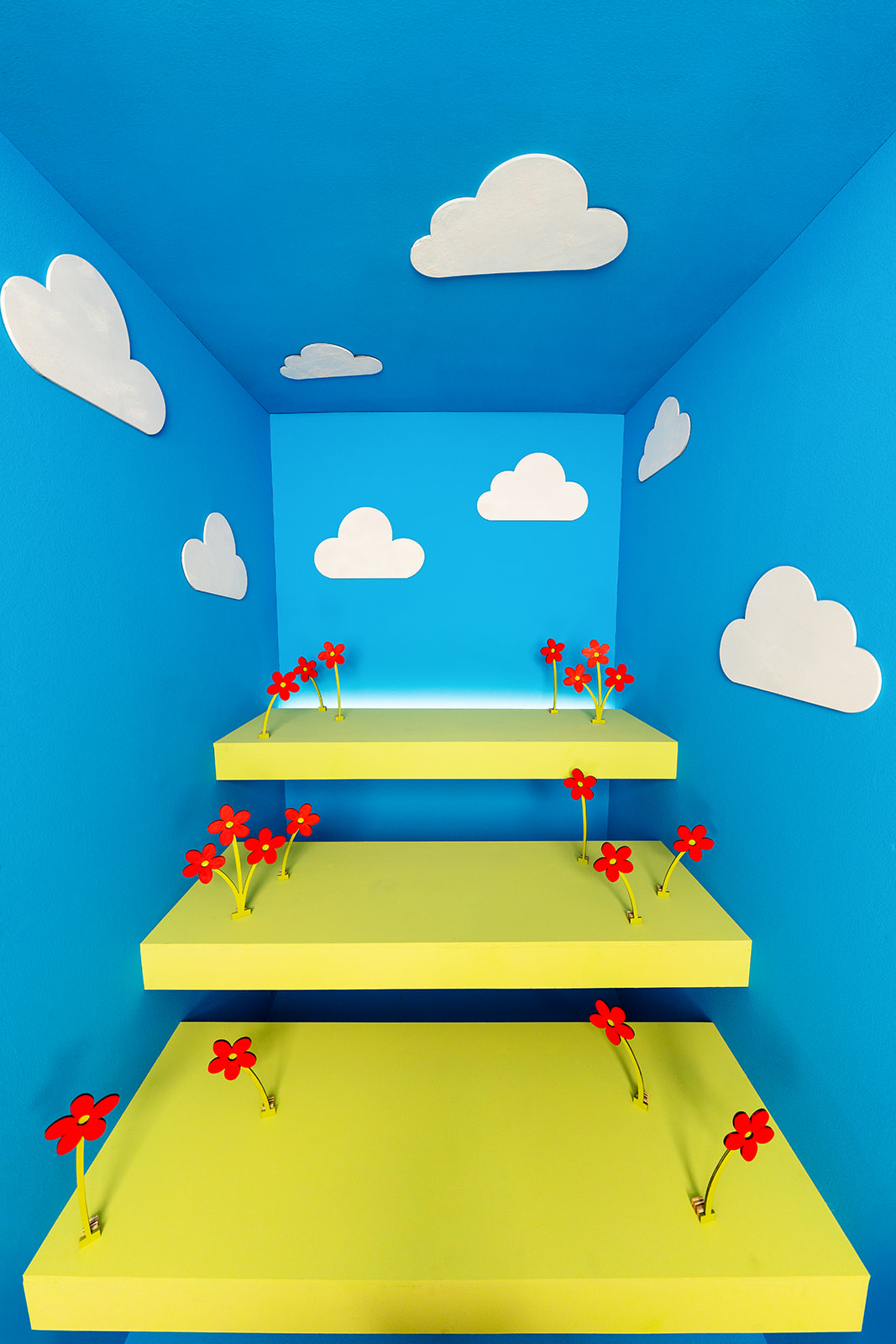
Each choice was simple on its own, but together they used color theory to create a dynamic palette that adds depth and visual interest, which is something I break down more in my color course.
Why the fisheye worked so well in the attic
The attic is a challenging space to shoot in because of the low ceilings and limited depth, but this lens completely changed how it felt.
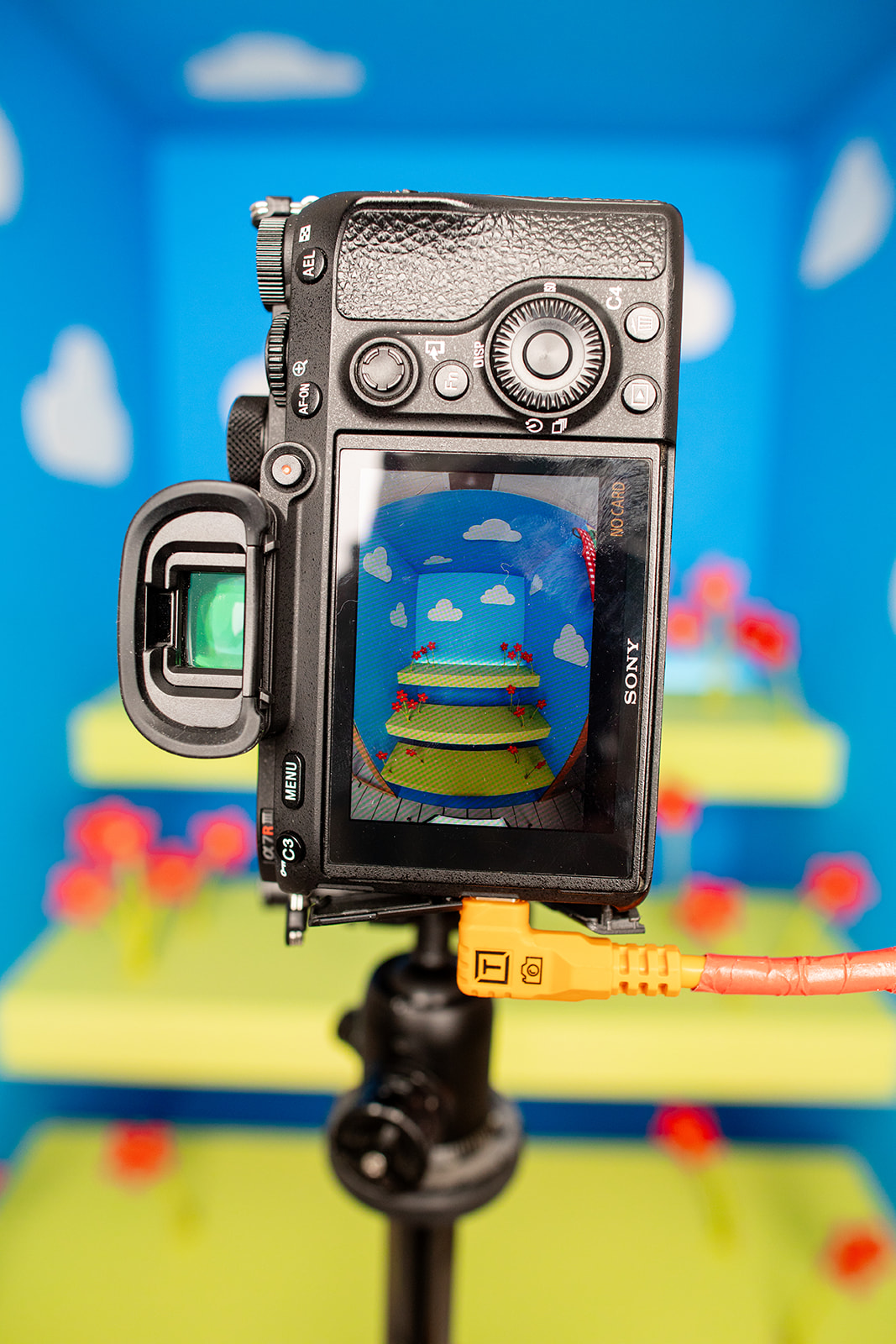
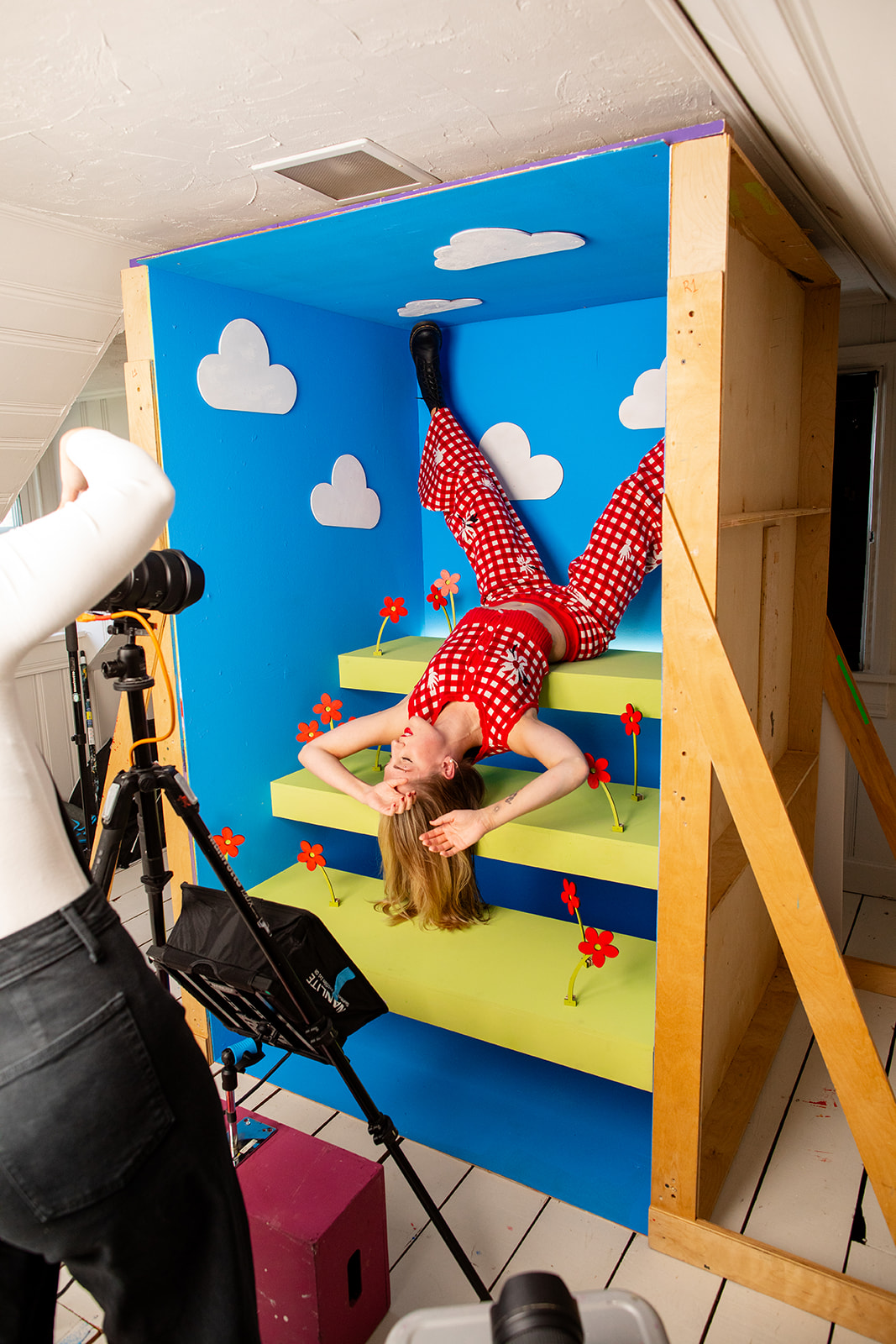
It made the space appear larger and more open, which gave us more visual room to work with even though nothing physically changed.
At the same time, it enhanced the surreal quality of the set. The design already had a stylized look, but the lens pushed it further in camera without needing anything extra in post.
How I approached shooting portraits with it
Shooting portraits with a fisheye requires a different mindset, especially when it comes to distance and positioning.
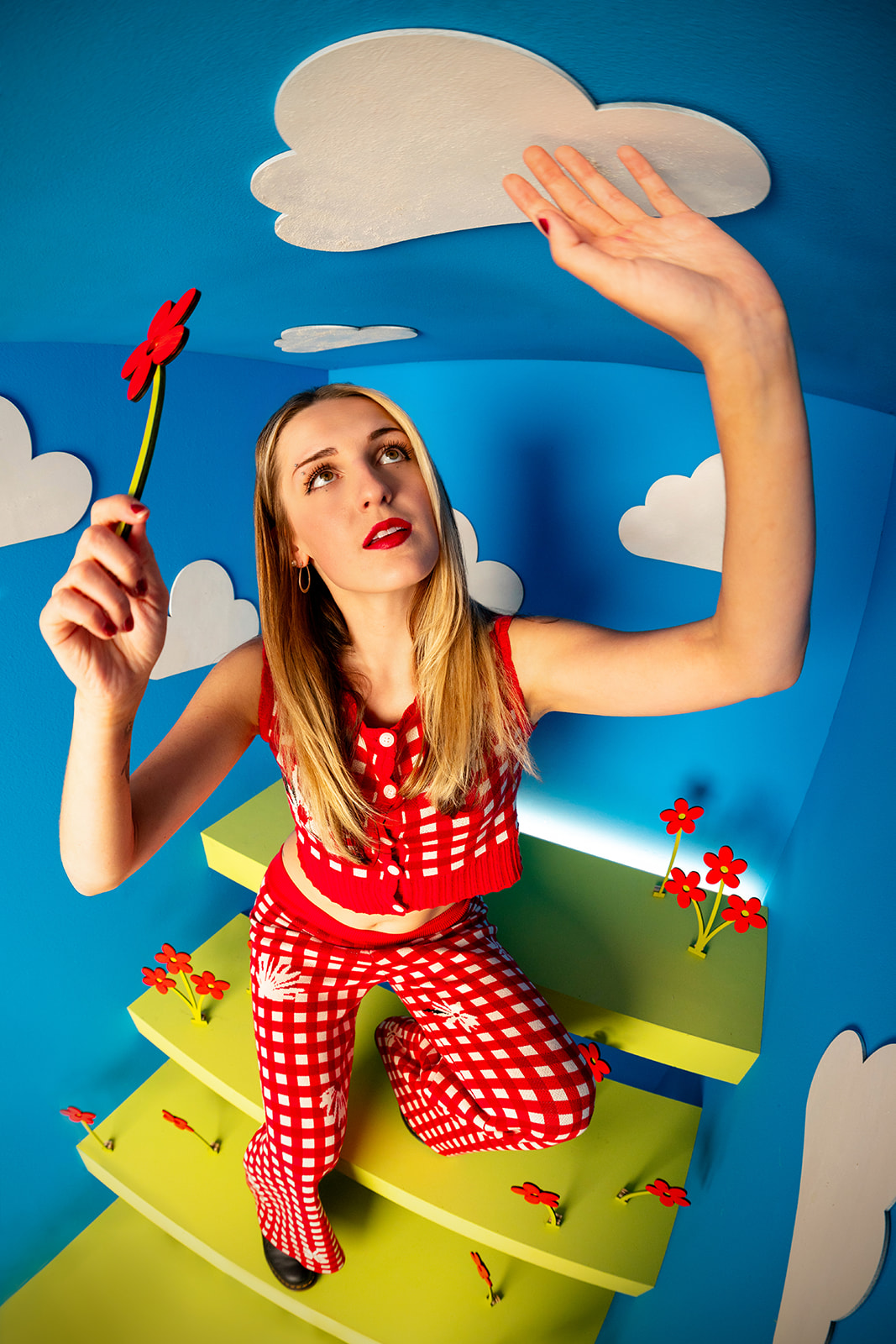
From a few feet away, the image feels more natural, but as you move closer, distortion increases quickly.
I used that intentionally.
- I directed our model to extend her arms and legs toward the camera to create more length
- I moved between low and high angles to exaggerate perspective
- I kept her face closer to the center of the frame when I wanted a more balanced look
After capturing the cleaner images, I started experimenting more by getting closer and shooting handheld, which introduced more distortion and pushed the look further.
What this lens does to portraits
This lens exaggerates whatever is closest to it while bending everything around the edges.
- Objects near the lens appear larger and more stretched
- Faces distort quickly if they move away from the center
- The center remains more stable while the edges feel more surreal
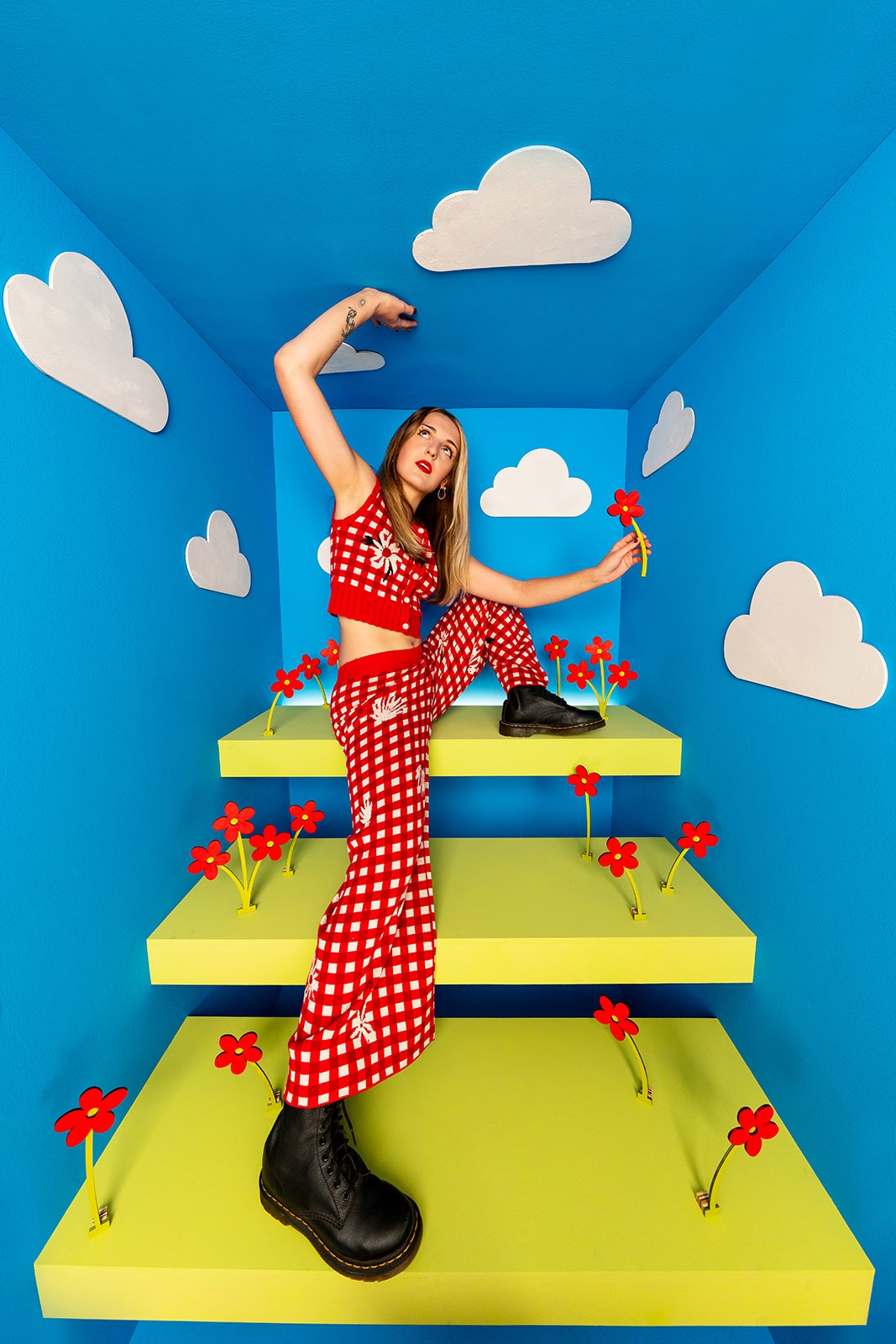
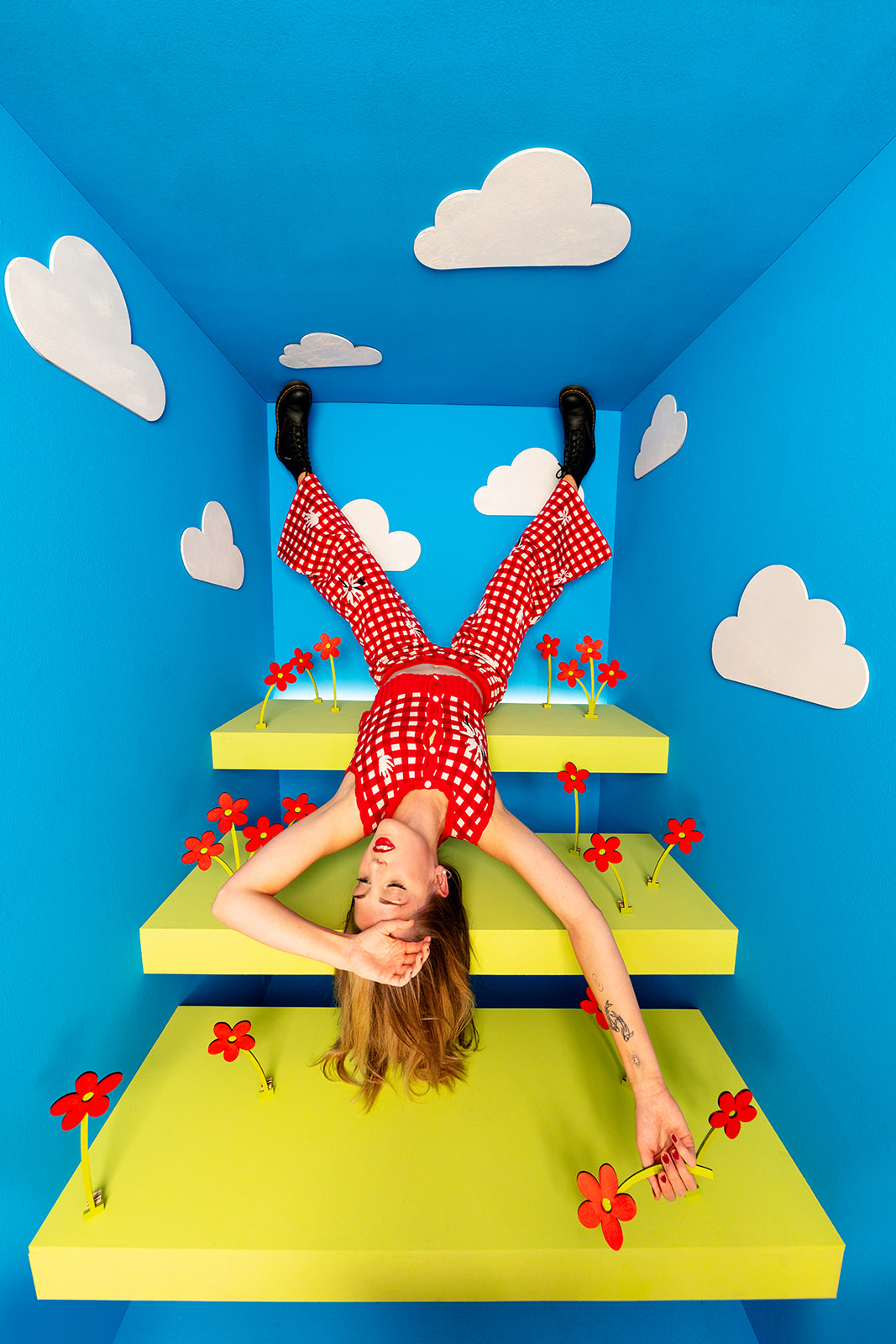
When it is used intentionally, it creates a very immersive and stylized look that is hard to replicate with other lenses.
Where it can fall apart
Because the effect is so strong, small mistakes become very noticeable.
- Getting too close too quickly can distort faces in a way that feels distracting
- Uncontrolled edges can make the frame feel messy
- Using distortion without a clear intention can make the image feel gimmicky
This lens rewards planning and control. But it also depends how surreal and experimental you want to get with your portraits. Sometimes breaking the rules a little creates the most interesting photos.
Tips for shooting portraits with a fisheye
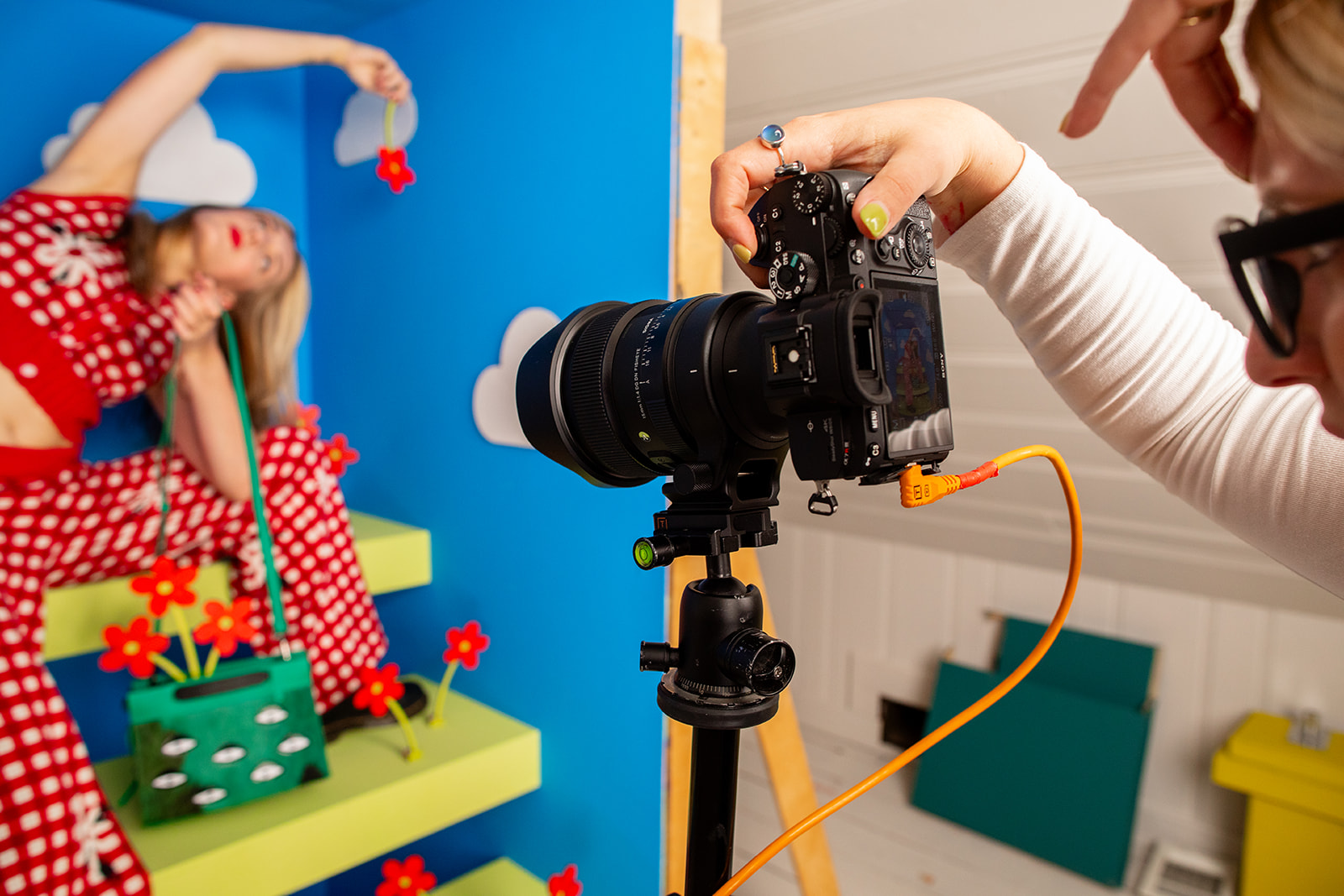
If you want to experiment with a lens like this, a few things help right away:
- Keep your subject’s face closer to the center for more natural proportions
- Use the edges of the frame to exaggerate props and shapes
- Change your camera height to push perspective further
- Design your scene knowing that everything will be visible
Final thoughts
Even though this lens was not designed for portraits, it opens up a completely different way of approaching them.
It forces you to think more about space, perspective, and how your subject interacts with the frame. When everything lines up, the images feel more dynamic and immersive straight out of camera.
For this shoot, it did more than capture the set. It changed how the set felt.
The photos are one thing, but to really see what this lens is doing in camera, the full shoot shows it best.
Watch the full shoot
This is Set 4 of our Attic Series, where we are building 25 sets in 100 days inside our attic.
We documented the entire process from building the set to photographing it.
You can watch the full YouTube video to see how everything came together, and we share even more behind the scenes on Patreon.