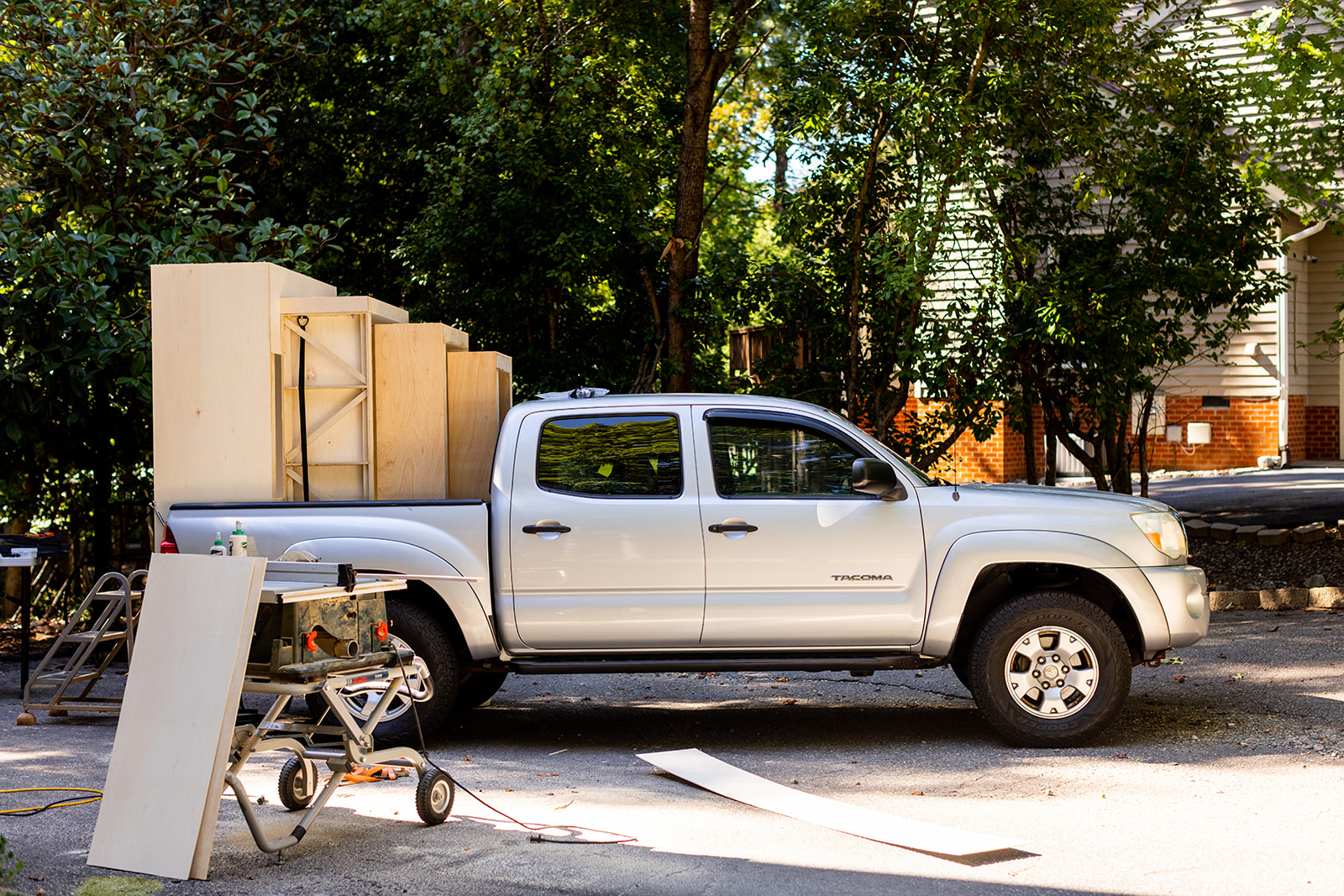

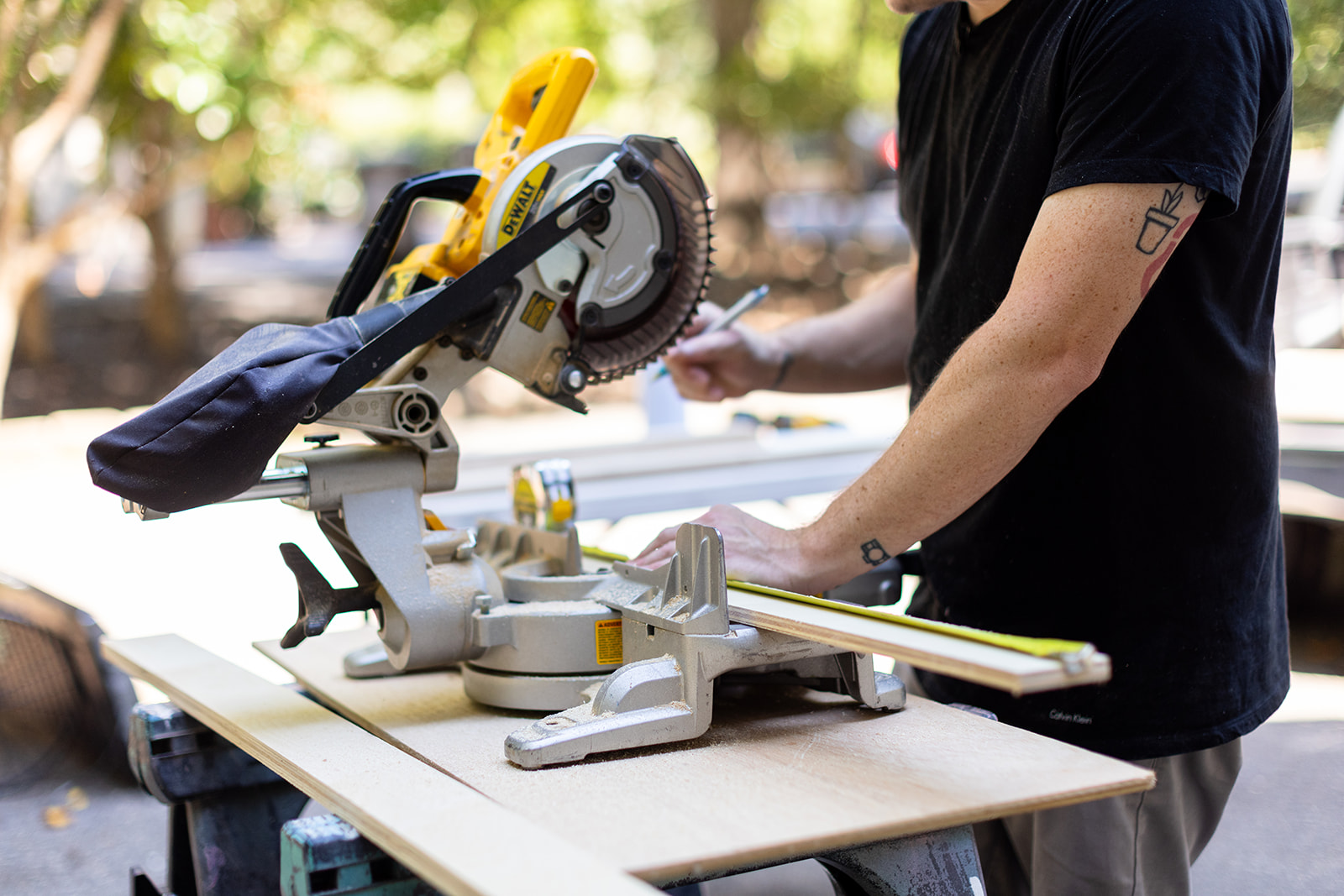
Day two of the set build had one very specific goal: frame out all of the side walls.
Which sounds simple enough until you remember that this set is made up of four separate boxes, and every box has two side walls.
So, eight walls.
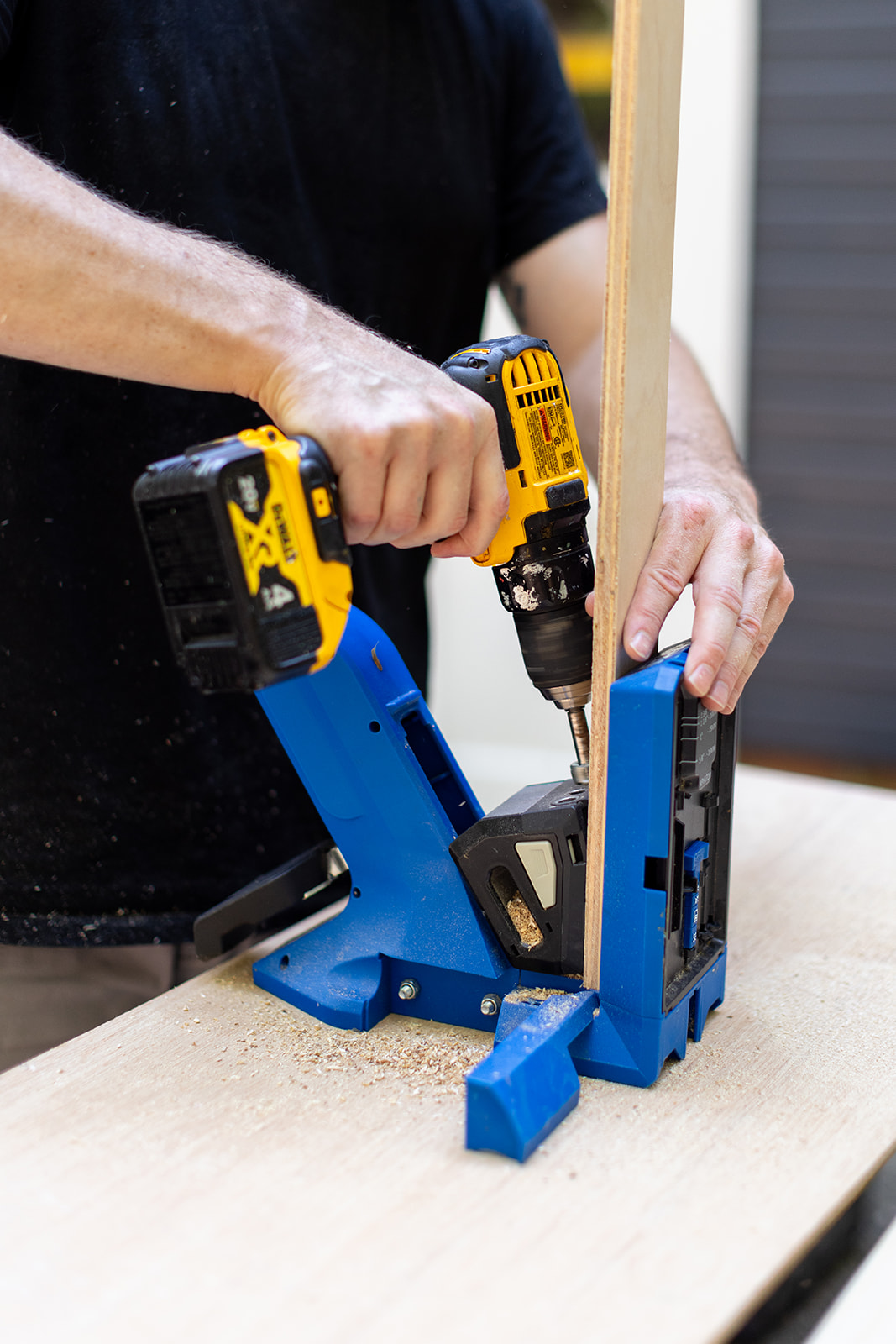
It was a very repetitive day of measuring, cutting, drilling, nailing, and driving what felt like an endless number of pocket screws. Not necessarily the most glamorous part of building a set, but by the end of the day, all of that repetition finally started to look like something.
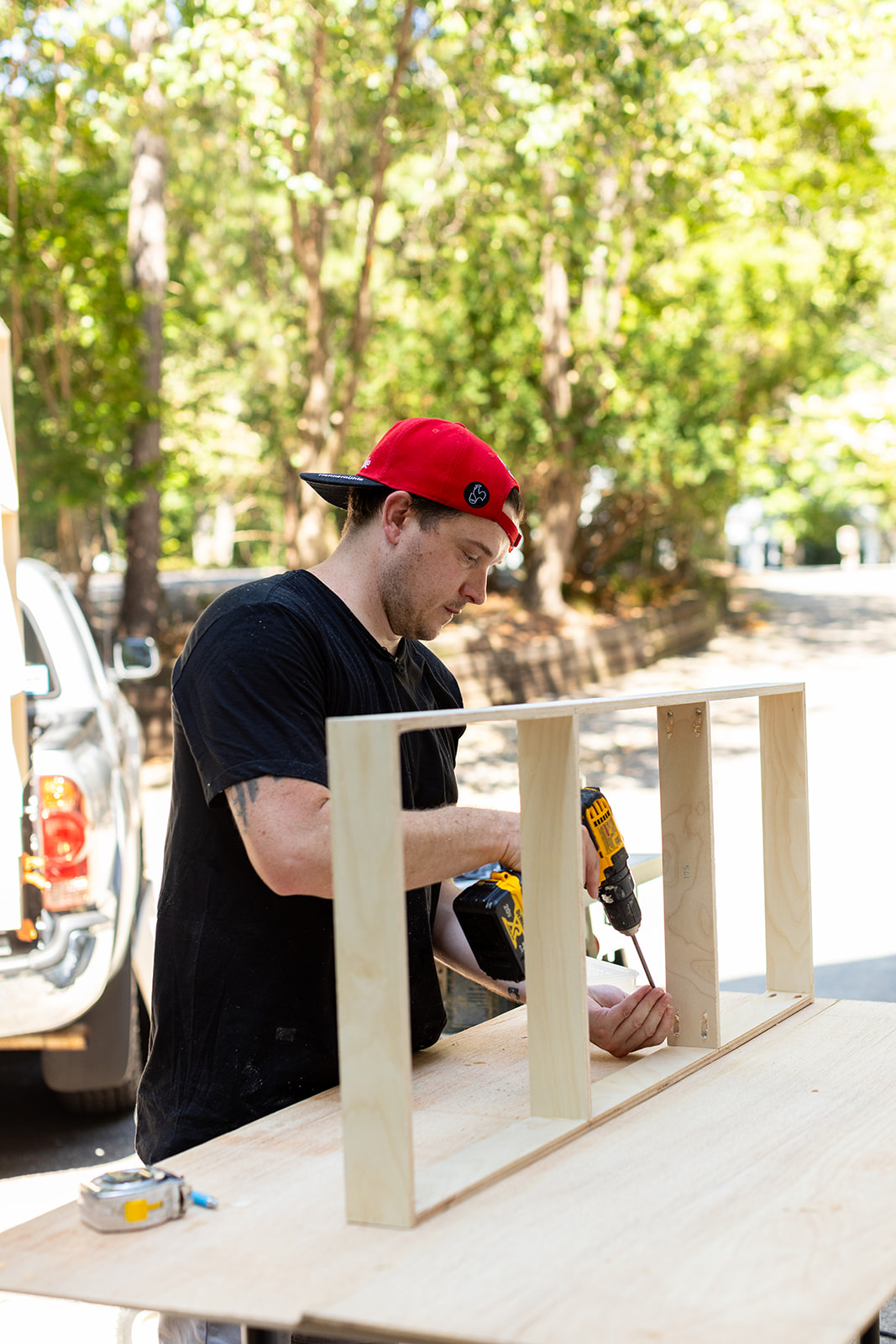
For the first time, we could actually get a sense of the scale of this thing.
We could see the height. We could see how much space it was going to take up in the truck. And we could finally start to see both ways the set is designed to be photographed.
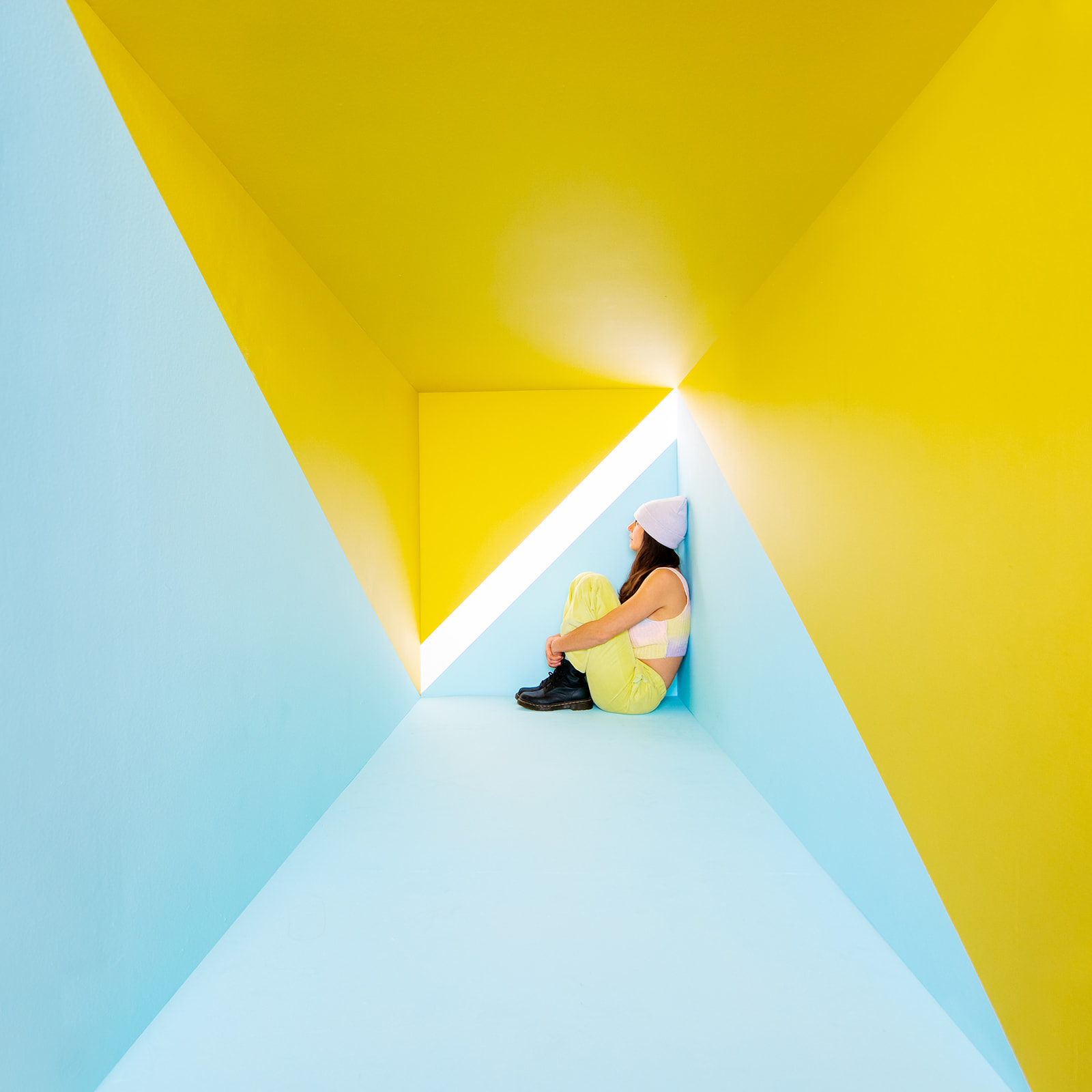
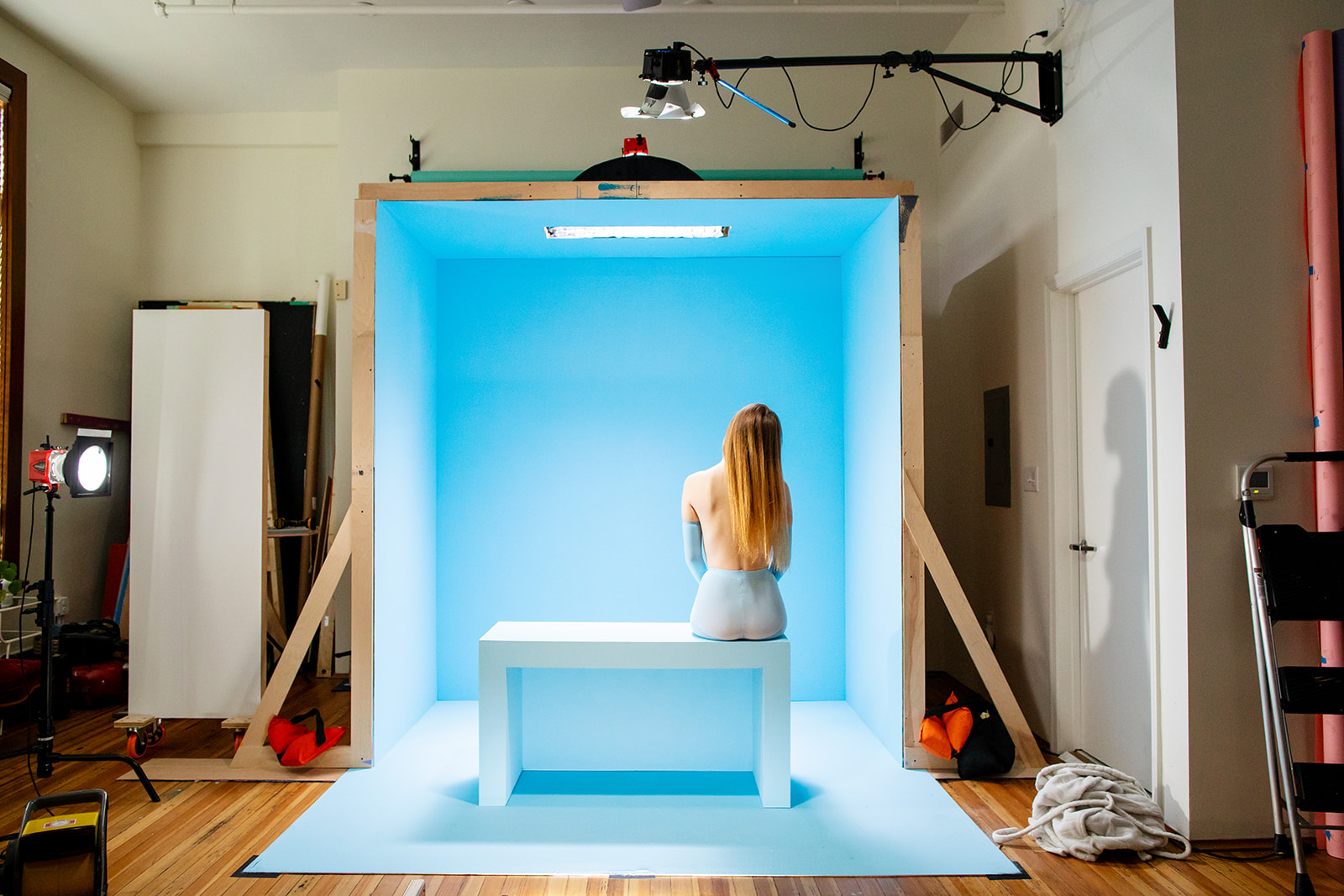
The main design is a reverse forced-perspective tunnel. Each of the four boxes gets progressively smaller, creating an exaggerated sense of depth, with a large picture window at the very end framing whatever landscape we happen to be in.
The landscape is really the final piece of the set.
But we also designed the entire thing to work from the opposite direction.

From the front of the truck, the different heights of the boxes create a giant staircase. This gives us a completely different way to photograph the set, but it also solves a practical problem. There will be locations where we simply cannot get the truck as close to the landscape as we would like. Being able to photograph someone high up on the staircase lets us get above some of the visual clutter and hopefully still make the landscape feel huge behind them.
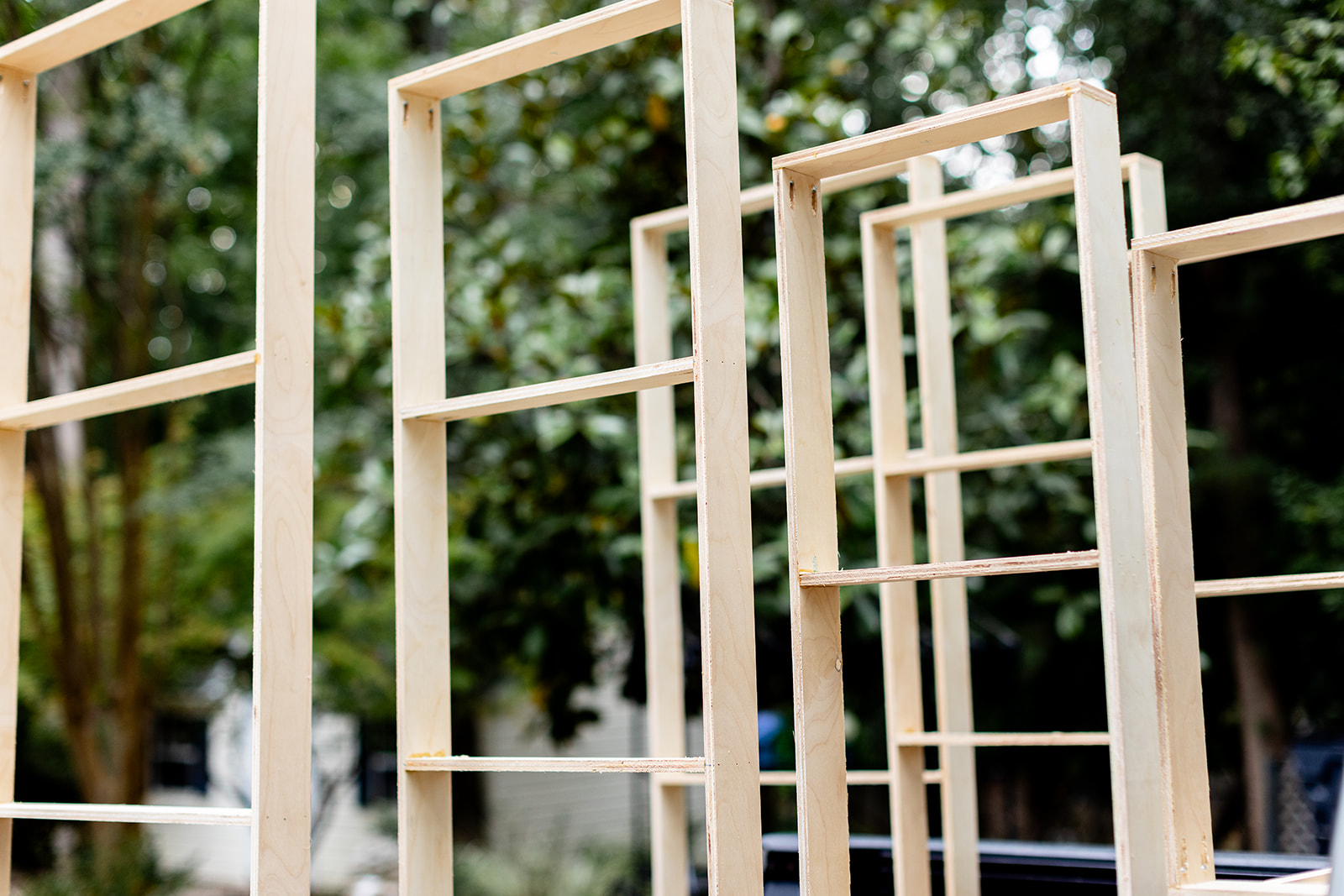
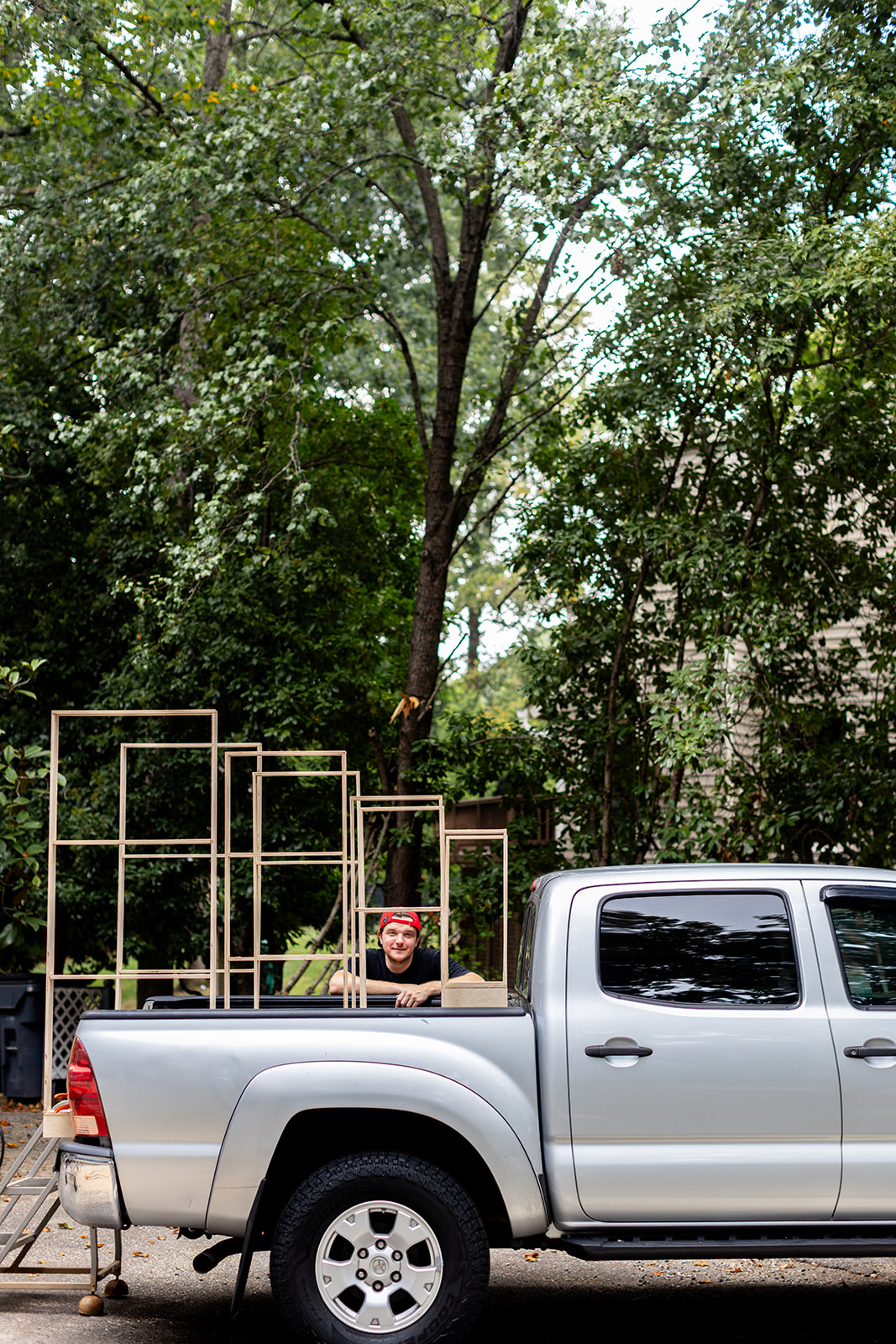
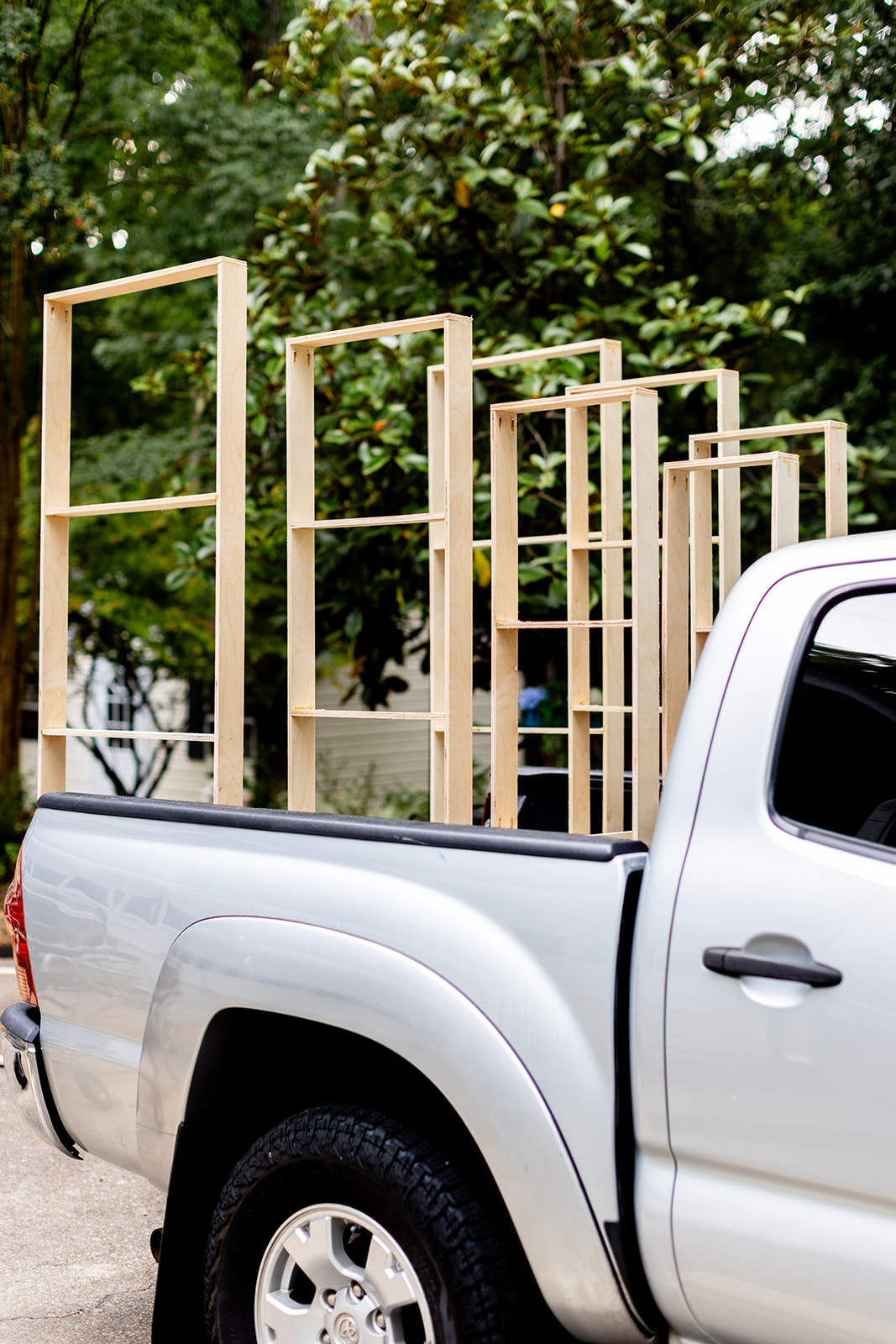
With the side walls finally standing, we could see that staircase effect for the first time.
The Entire Set Is Basically Made From Flats
David has a flat-building course where he teaches how to build a pair of Hollywood flats, which are essentially one of the basic building blocks of set construction.
That same idea is how he designed almost this entire truck-bed set.
If you broke the whole thing apart, it is really just a collection of smaller flat-like pieces that connect together to create the floors, walls, and ceilings of each box.
Except these aren't normal flats.
We're going to be standing and climbing on parts of them. They're going to travel roughly 7,500 miles in the back of a truck. They'll be exposed to wind, sun, temperature changes, and potentially rain. And the entire structure has to remain secure while we're moving from location to location.


So every piece has to be built much more thoughtfully than a wall that would normally sit inside a studio for a few days.
It has to be lightweight enough that we aren't putting unnecessary weight in the truck, strong enough to support us, and modular enough that we can actually assemble and work on it.
That balance has probably been one of the biggest challenges of the build so far.
Next Comes One of the Hardest Problems: Lighting It
Getting the basic structure built is especially important because there are still some major things we can't fully solve until we can physically stand inside the set.
Lighting is probably the biggest one.
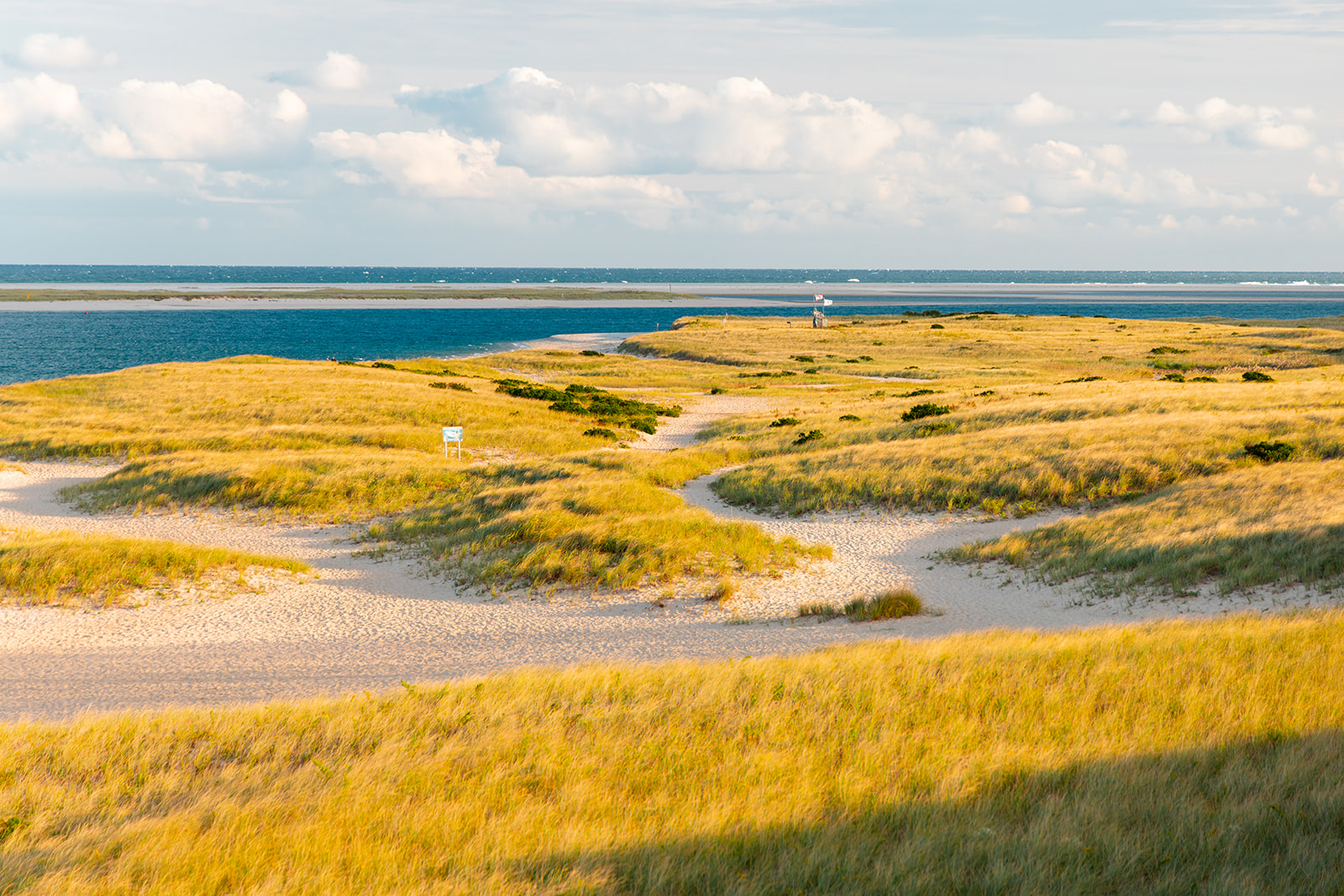
We aren't just lighting a photo set. We have to light the set and balance it with the landscape outside the picture window.
And that landscape is going to change constantly.
One day we might be photographing in bright daylight. The next might be sunrise. Then sunset, an overcast afternoon, or an evening sky. The direction, intensity, and color of the available light will be different at practically every stop.
On top of that, everything has to fit in the truck and ideally run on battery power.
So we can't just bring an entire studio's worth of lighting equipment with us and figure it out when we get there.
Once the structure is fully assembled, we can finally start experimenting with where lights can physically go, how much power we actually need, how to hide them within the set, and how we're going to balance the interior with whatever is happening outside.
There are still a lot of unanswered questions.
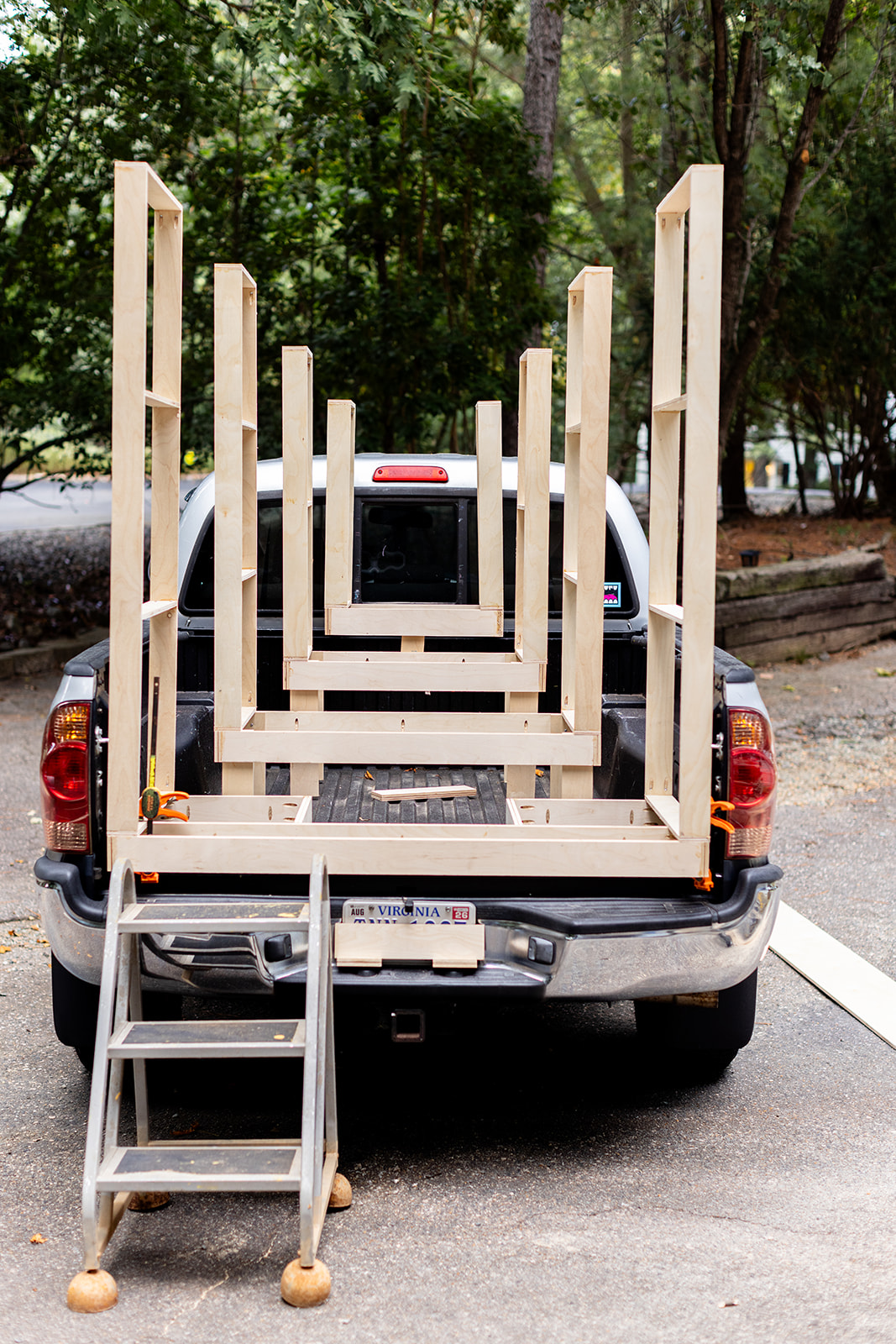
But at the end of Day 2, for the first time, we could stand back and actually see the shape of the thing we've been trying to figure out on paper for weeks.
Eight walls down.
And suddenly, this very strange photo studio we're about to drive across the country is starting to feel real.